Gentle Baby: Soap Bar Recipe
Also filed inBath and BeautySkincare
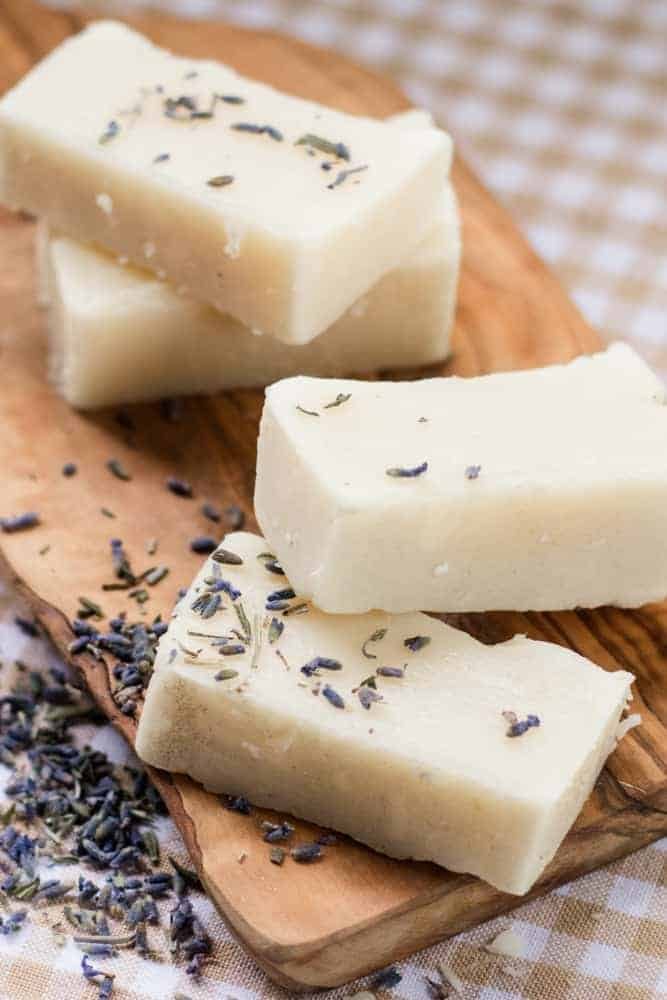
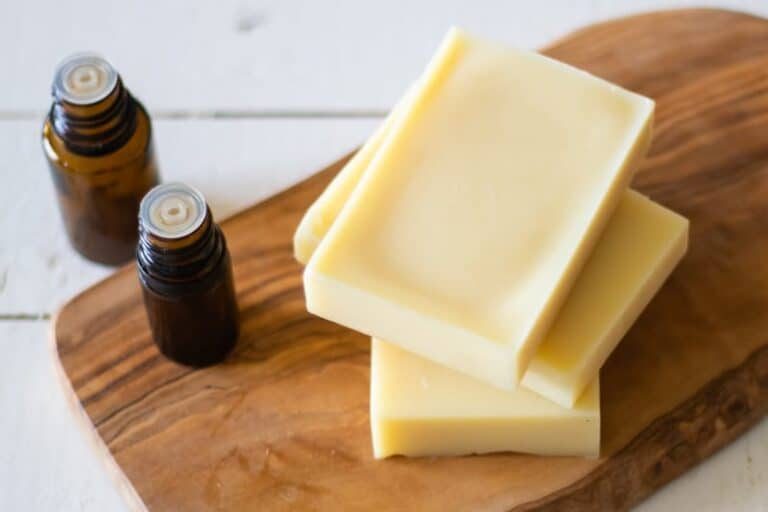
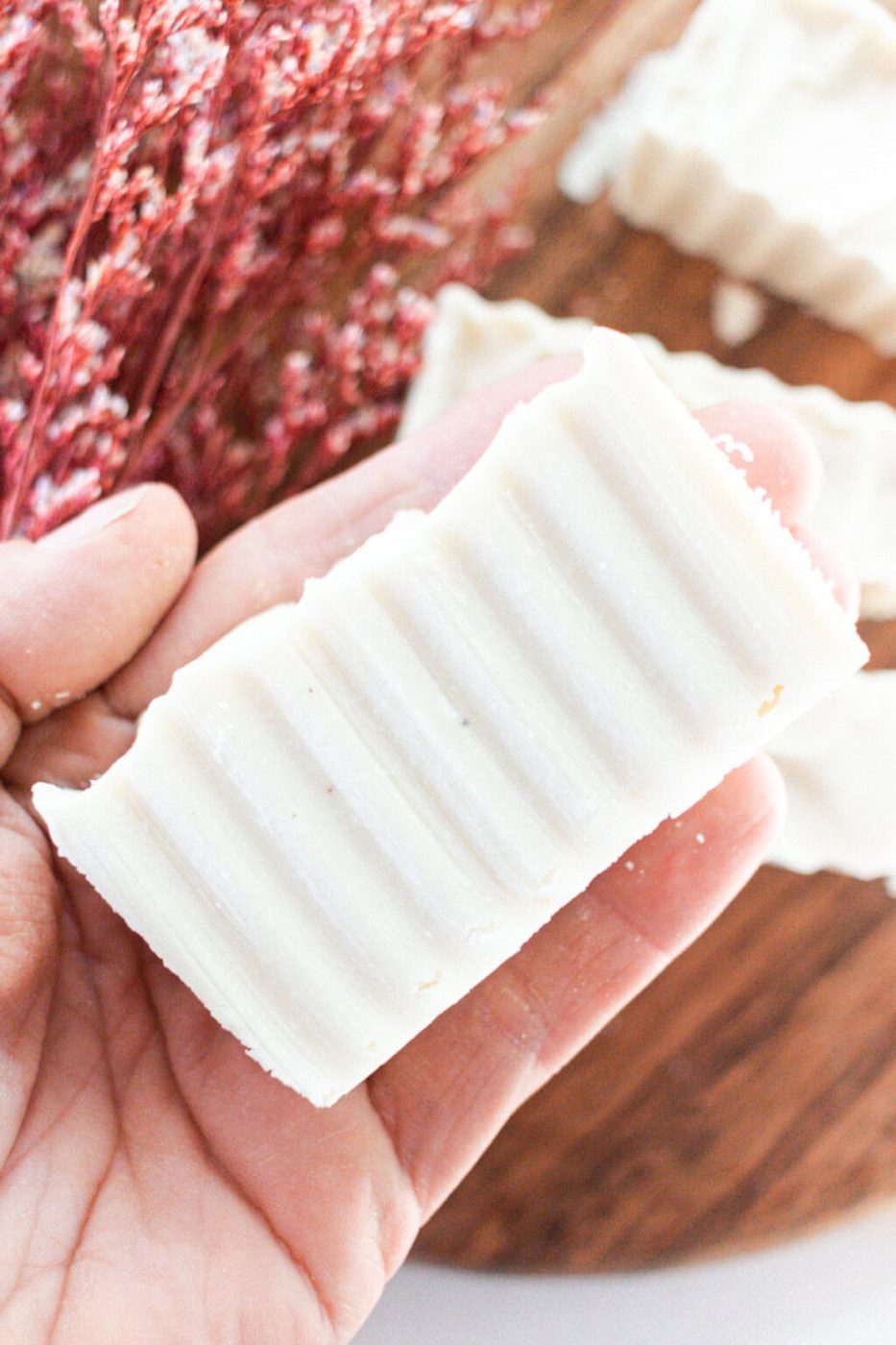
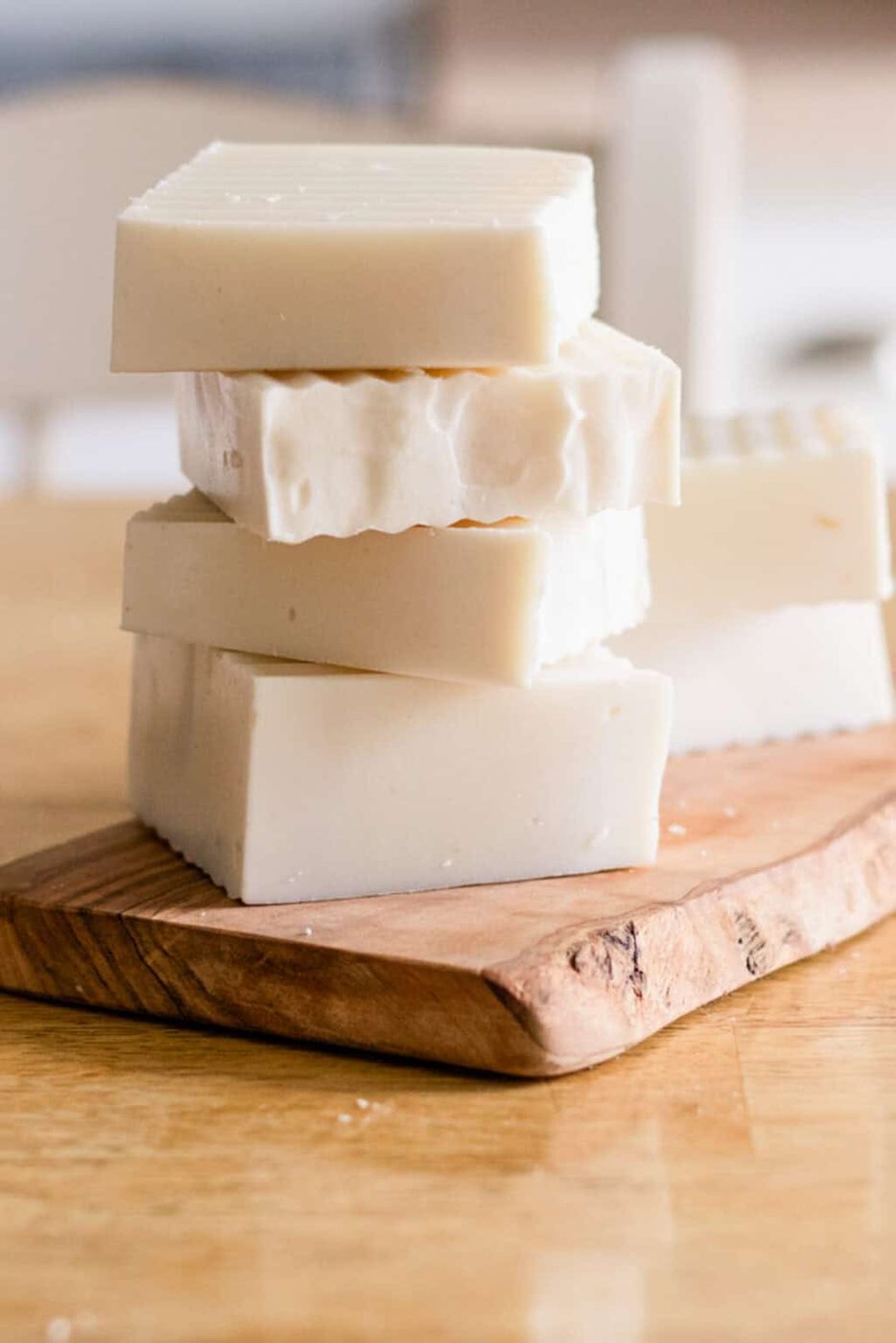
This homemade baby soap bar is gentle enough for delicate skin and made with natural ingredients you can feel good about. With cocoa butter, coconut oil, mango butter, and jojoba oil, this cold-process soap creates a soft, creamy lather perfect for everyday use.
Making soap is actually quite simple and can be made for a relatively low cost. Our soap-making days started with melt and pour bases, which we would use in DIYs like our oatmeal soap recipe, solely due to the fact that we was very nervous about the lye. But as with most things, after we made it once, we realized it was much easier than we thought and could be done safely.
This baby soap recipe is perfect for baby’s skin; it is gentle, cleansing and leaves the skin soft and smooth. This soap is made with all-natural ingredients and scented with pure lavender essential oil.
How to Make the Best Homemade Baby Soap Bar?
In order to make cold-process soap bars, you will need lye, a liquid and either a fat or oil. The oil, when mixed with the lye, is what allows for the saponification process, making the lye safe. Choosing different oils or fats, for example, allows you to make different styles of soap, such as a moisturizing soap bar for dry skin, while others will make the perfect bar for oily skin.
For this baby soap recipe, we am choosing gentle and moisturizing ingredients that are perfect for sensitive skin.
Baby Soap Ingredients
- Mango Butter: Mango butter comes from the seed of the mango fruit and is one of our favorite butters to use in baby care recipes. It’s similar to shea and cocoa butter, offering a smooth, non-greasy feel while helping lock in moisture.
- Cocoa Butter: Cocoa butter adds a creamy texture and firmness to the soap bar, helping it hold its shape and last longer. It also gives the soap a rich, velvety feel that makes lathering extra smooth.
- Coconut Oil: Coconut oil is a great addition to baby soap thanks to its gentle nature and creamy lather. It’s commonly used in natural soaps and body care products, and it helps give the bar a nice balance of cleansing and moisture.
- Jojoba Oil: Jojoba oil is a lightweight carrier oil and is a popular choice in natural skincare because it absorbs easily and leaves skin feeling soft, not greasy. We like using it in baby soap for its gentle, moisturizing feel.
- Lavender Essential Oil: Lavender is a very gentle oil. We use it to scent our lavender soap recipe and it is a great choice for this soap recipe.
Essential Oil Variations
- Roman Chamomile
- Frankincense
- Rose
- Jasmine
- Copaiba
What do You Need to Make Cold-Process Soap Bar?
- Soap mold
- Immersion Blender
- Digital scale
- Glass bowl or other heat resistant container
- Gloves
- Eye protection, full covering goggles are best
Important Safety Notes
This is the soap we make in our own house, and cold process soap means working with lye. Please read through these before you start, and make sure this recipe is a good fit for you and for whoever will be using the bars.
- Lye is necessary to make soap, but on its own it can burn skin and damage eyes, so take it seriously every single time.
- Always wear goggles, gloves, and long sleeves, tie back long hair, and work in a well ventilated area or outside if you can.
- Always add the lye to the water, never the water to the lye. It heats up fast and gives off strong fumes.
- Keep children and pets out of the room while you are mixing, and store the lye out of their reach.
- Do not change the weights or swap the oils without running the new amounts through a soap calculator first, because the lye amount depends on the exact oils used.
- Let the bars cure fully before anyone uses them, since soap that has not finished curing can still be harsh on skin.
- Do a small patch test on the inside of the arm before a cured bar goes on a baby, and check with your doctor first if there are known allergies or sensitive skin.
Natural Baby Soap Recipe
We used a soap calculator to get these exact measurements. If you want to change up the recipe at all, you will need to get new measurements. Having the right proportions is a crucial step in soap making.
Safety Note: When working with lye, be sure to work in a well-ventilated area and wear safety goggles, a mask, long sleeves, and rubber gloves. If lye gets on the skin or in the eyes, it can be very harmful. Be sure to read the tips below before starting.
- Using a digital scale, measure out your water and pour it into a heat-resistant container that can handle the rapid temperature increase.
- Measure out the lye, then slowly add it to the water a little at a time, stirring as you go and letting it dissolve before adding more. Note, the chemical reaction will cause it to heat up quickly.
- Using the digital scale, measure out the mango butter, cocoa butter, coconut oil and jojoba oil. Pour into a medium-size saucepan and melt over medium heat.
- Once the oils and butters are melted, remove them from the heat.
- When the oils cool to around 100°F, slowly add the lye and water mixture to the oil, and mix with an immersion blender. This will take a couple of minutes. You will know it is the right consistency when the soap from the blender drips and pools up on top of the soap in the saucepan. This is known as the trace.
- Add in the lavender essential oil and mix briefly with the immersion blender.
- Pour the soap into a soap mold. If using silicone soap molds, no prep is required. Other molds may require parchment paper.
- Allow the soap to harden in the molds for a minimum of 24 hours or up to 3 days.
- Remove the soap from the molds and allow to cure for an additional 5-6 weeks before using.
Expert Tips
- Always add lye to water. Never add water to lye.
- When making cold process soap, you must work in a well-ventilated area away from kids and pets.
- Do not add all the lye at once to the water. Just add a little at a time and stir until dissolved.
How to Use Natural Baby Soap
This soap bar will work great for both the hair and body. Allow the soap to soak in for a couple of minutes before rinsing off with warm water. Use the homemade baby soap bar like normal, staying clear of your child’s eyes.
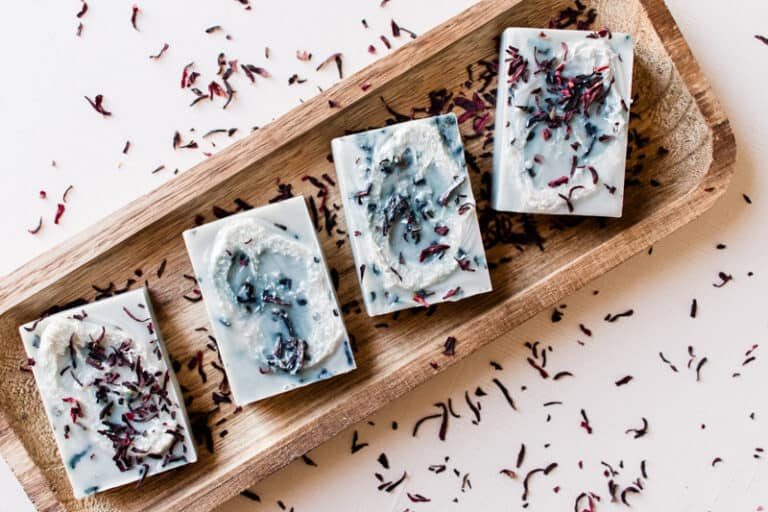
More of our favorite soap bars
5 from 16 votesGentle Baby Soap Bar Recipe
By the studio Ascher Prep: 10 minutes minsActive: 30 minutes minsAdditional Time: 1 day dTotal: 1 day d 40 minutes mins Yield: 6 bars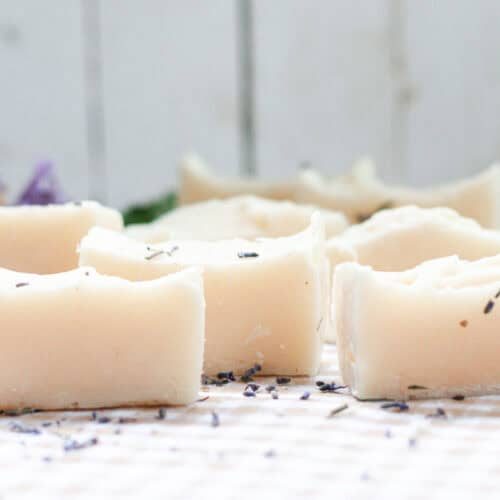 SaveSaved Pin Print This homemade baby soap bar is made with simple, natural ingredients and has a gentle feel that's great for little ones.
 Equipment
- Soap mold
- immersion blender
- digital scale
- Glass bowl or other heat resistant container
- Gloves
- Eye protection, full covering goggles are best
Ingredients
- 8 ounces mango butter
- 4 ounces cocoa butter
- 4 ounces jojoba oil
- 2 ounces coconut oil
- 10 drops lavender essential oil
- 2.16 ounces lye
- 4.84 ounces water
Instructions
- Use a digital scale to measure the water, then pour it into a heat-resistant container that can handle sudden temperature changes.
- Measure out the lye, then slowly add it to the water a little at a time, stirring as you go and letting it dissolve before adding more. The chemical reaction will cause it to heat up quickly. Set aside. (see notes below)
- Melt mango butter, cocoa butter, coconut oil and jojoba oil in a medium-size saucepan over medium heat.
- Once the butter and oils are melted, remove from heat.
- When the oils cool to around 100°F, add the lye water in and *mix with an immersion blender. This will take a couple of minutes. You will know it is the right consistency when the soap from the blender drips and pools up on top of the soap in the saucepan. This is known as the trace.
- Add in the lavender essential oil, mix in with the immersion blender.
- Pour the soap directly into the silicone soap molds. If using another type of mold, it may require parchment paper.
- Allow the soap to harden for at least 24 hours or up to 3 days. Remove the soap from the molds and allow bars to cure for 5-6 weeks before using.