
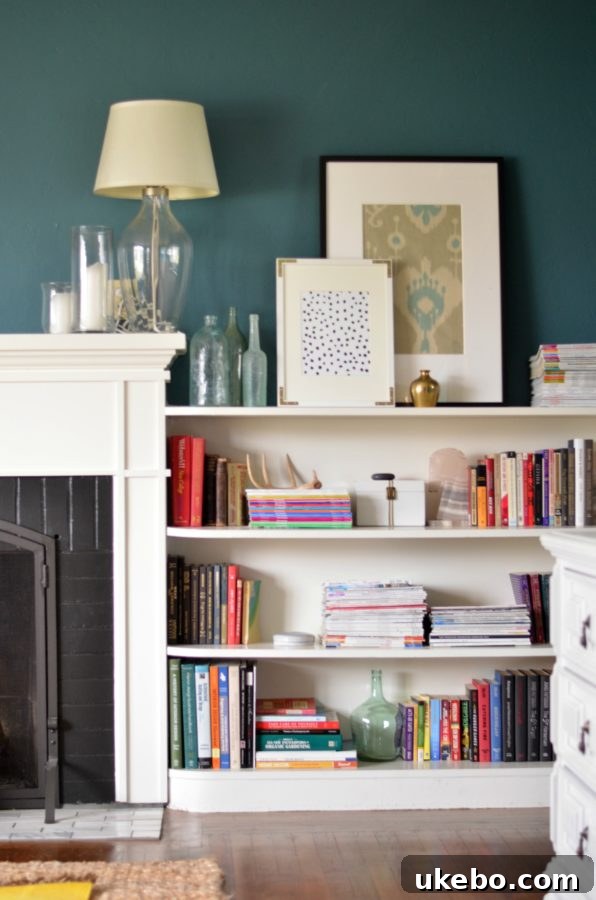
Rethinking Built-in Bookcases: Embracing Freestanding Furniture for Style and Flexibility
Hello design enthusiasts!
Today, I’m sharing a little secret, a design dilemma that has quietly simmered in our living room for quite some time. While many dream of finding a home adorned with charming built-in features, I must confess: I’m not entirely enamored with the built-in bookcases in our living room.
The Great Built-in Debate: A Personal Preference
I know, I know… for many, built-in bookcases are a prized architectural detail, especially in an older home. And believe me, the guilt is real when I even *think* about wishing they weren’t there! In fact, these very bookcases were among the first details I noticed and appreciated when we initially toured the house. There’s an undeniable charm to the history and permanence they suggest, and in a smaller home, dedicated storage is often hailed as a golden feature.
However, despite these conventional appeals, built-in bookcases simply don’t resonate with my personal aesthetic or functional preferences. This isn’t to say I dislike all built-ins; on the contrary, I’m absolutely obsessed with the built-in buffets, hutches, and integrated storage systems we have in our dining room and hallway. Those are perfectly suited to their spaces, offering both utility and a seamless, custom look. But when it comes to *bookcases* specifically, my heart leans elsewhere. I find myself yearning for the freedom and personality that individual furniture pieces bring to a space. While I appreciate a well-designed niche, the fixed nature of a built-in bookcase can feel restrictive.
The Allure of Freestanding Pieces: Flexibility and Creative Expression
Those who follow my design journey know I suffer from a delightful, albeit relentless, case of “rearrangitis” – and I’m absolutely #sorrynotsorry about it! This penchant for constantly refreshing and reconfiguring my surroundings is precisely why freestanding furniture pieces hold such appeal for me. They offer unparalleled flexibility, allowing me to shift, re-style, and completely transform a room’s dynamic whenever the creative urge strikes. This adaptability is crucial for keeping a home feeling fresh, dynamic, and truly reflective of its inhabitants’ evolving tastes.
Beyond the practical advantages of rearrangement, freestanding furniture also offers a unique avenue for creative expression. Incorporating distinctive and character-filled pieces into a space allows me to really flex my design muscles. While one can certainly style shelves to perfection, there’s a different kind of magic in discovering that special, one-of-a-kind treasure at a thrift store or antique shop and finding the absolute perfect spot for it in your home. These individual pieces often carry their own stories and patina, infusing a room with depth, personality, and a sense of curated history that built-ins, by their very nature, often cannot replicate.
I’ve been drawing inspiration from various furniture styles lately, imagining how they might transform our living room. So, let’s play a little game of “if the bookcase wasn’t there.” Here are a few unique pieces I could absolutely envision gracing this spot, hypothetically speaking, of course, to truly elevate the space.
Hypothetical Transformations: Five Furniture Alternatives to Built-ins
1. Burlwood: A Timeless Statement of Natural Elegance
Burlwood has captivated me for ages, and its unique, swirling grain patterns offer an unparalleled sense of natural artistry. My admiration for this exquisite material was reignited after seeing Jesse’s stunning ORC reveal, which left me with a serious hankering to incorporate burlwood into our little bungalow. A burlwood dresser or console table in place of the built-ins would introduce an incredible layer of organic texture and sophistication.
Imagine the warmth and visual interest it would bring, transforming the space from merely functional to an artistic focal point. Burlwood pieces possess a chameleon-like quality, blending seamlessly with both traditional and contemporary aesthetics. Its intricate patterns mean that each piece is inherently unique, acting as a natural work of art that requires minimal additional adornment. This choice speaks to a desire for grounding the room with elements that celebrate natural beauty and artisanal craftsmanship, creating a luxurious yet approachable atmosphere. Such a piece would immediately elevate the room’s design narrative, offering a conversation starter and a testament to refined taste.
via Dwell
2. Inlay: Exquisite Detail and Global Inspiration
Next on my list is inlay furniture, a true testament to meticulous craftsmanship and decorative artistry. An intricately inlaid cabinet or chest would infuse the living room with a layer of global elegance and bespoke charm. The delicate patterns, often crafted from contrasting materials like mother-of-pearl, bone, or exotic woods, create a mesmerizing visual tapestry that captures attention and sparks curiosity. Such a piece transcends mere functionality, becoming a sculptural element within the room.
Choosing an inlay piece signifies an appreciation for history, culture, and the art of decorative detailing. It offers a sophisticated alternative to the linear predictability of bookcases, providing enclosed storage that maintains a sense of mystery and allure. The subtle shimmer of the inlaid materials catches the light, adding depth and dimension that can dramatically alter the perception of the space. This option speaks to a desire for a richly layered interior, where every object tells a story and contributes to a carefully curated environment. It’s about introducing a piece that feels discovered, cherished, and utterly unique, serving as a captivating focal point in any living area.
via The Glitter Guide
3. Ultra Sleek: Modern Minimalism with Impact
For those who lean towards a more contemporary aesthetic, an ultra-sleek console or credenza would be a striking choice. This style prioritizes clean lines, minimalist forms, and often, high-gloss or textured finishes that create a sophisticated, uncluttered look. Such a piece would introduce a bold, modern edge to the living room, contrasting beautifully with the traditional architectural elements of an older home. It’s about creating visual impact through simplicity and refined materials, rather than ornate details.
An ultra-sleek furniture item offers efficient, discreet storage, keeping clutter out of sight and maintaining an airy, expansive feel. The reflective surfaces or matte finishes contribute to a sense of calm and order, which can be incredibly soothing in a busy living space. This design direction is perfect for those who appreciate understated luxury and a streamlined appearance. It transforms the space into a gallery-like setting, where the furniture itself is a sculptural statement. Furthermore, its versatility means it can adapt to changing trends, always looking fresh and relevant, making it a smart long-term investment for a modern home. This approach truly highlights the beauty of form and function in perfect harmony.
via Domaine Home
4. Chinoiserie Charm: Exotic Artistry and Vibrant Personality
Chinoiserie furniture holds a special place in my heart for its ability to inject vibrant color, intricate artistry, and a touch of whimsical exoticism into any room. A chinoiserie cabinet or chest, adorned with delicate hand-painted scenes, would not only serve as a functional storage piece but also as a magnificent work of art. This style, inspired by traditional Chinese aesthetics but interpreted through a European lens, offers a rich narrative and an undeniable sense of history and charm.
Such a piece would instantly become the focal point of the living room, drawing the eye with its detailed motifs of pagodas, floral arrangements, birds, and figures. It’s a statement of bold individuality and a celebration of cross-cultural design. The vibrant lacquers—often deep reds, greens, or blues—provide a striking contrast to more muted room palettes, awakening the space with an unexpected pop of color and visual texture. Beyond its beauty, a chinoiserie cabinet offers practical, concealed storage, making it perfect for stashing away odds and ends while maintaining a sophisticated façade. It embodies a blend of elegance and playful fantasy, ensuring the living room feels anything but ordinary and reflecting a confident, eclectic design sensibility.
via Lonny
5. Functional & Chic: The Secretary Desk as a Micro Office
Finally, for a blend of aesthetics and practicality, a stylish secretary desk would be a phenomenal choice, particularly for maximizing a smaller corner or alcove. This piece offers more than just storage; it introduces a dedicated, compact workspace. Imagine a beautiful vintage secretary, perhaps in a rich wood or painted finish, tucked perfectly into the existing niche. When closed, it presents a neat, elegant facade, concealing its inner workings. When opened, it reveals a charming desktop, small compartments, and drawers, creating an instant mini-office without sacrificing style or valuable floor space.
In today’s world, where work-from-home scenarios are increasingly common, a secretary desk provides an ingenious solution for integrating a functional workspace into a living area seamlessly. It avoids the need for a bulky office desk, maintaining the warmth and relaxation of the living room. This option speaks to intelligent design that caters to modern needs while respecting traditional forms. It allows for organized storage of papers, pens, and even a laptop, keeping essentials close at hand yet neatly tucked away. A secretary desk offers a practical, multi-functional alternative that brings both character and a quiet productivity zone into the heart of the home, proving that even the most cherished built-ins can be outshone by thoughtfully chosen, versatile freestanding pieces.
via Lonny
Your Turn: Built-ins vs. Freestanding?
Each of these hypothetical pieces offers a distinct personality and would undoubtedly add a rich layer of visual interest and character to the living room. They represent a design philosophy that values adaptability, personal expression, and the unique stories that individual furniture pieces can tell. While built-ins offer permanence and integrated storage, the charm of curating a space with freestanding elements allows for an evolving aesthetic that truly feels like “home.”
So, what about you, fellow design lovers? Are you unwavering fans of the classic built-in, or do you, like me, prefer the endless possibilities and design freedom offered by individual, freestanding furniture pieces? I’d love to hear your thoughts and preferences in the comments below. Until next time, keep designing and dreaming!
Xo-Shavonda