
Transforming Our Backyard: Choosing the Perfect Patio Hardscape for Outdoor Living
Hello everyone! We’re excited to dive into a topic that’s been at the forefront of our minds: transforming our outdoor spaces. After dedicating significant time and energy to various interior projects, our focus has decisively shifted to the exterior. This transition marks the beginning of creating a more functional, enjoyable, and sustainable outdoor living area, with a primary goal of designing and building a new patio.
As we’ve mentioned previously, we are fortunate to have a substantial yard to work with. However, after three summers in our home, the sheer scale of greenscape has become a significant challenge. The maintenance required to keep up with so much lawn is truly staggering. We spend countless hours mowing, edging, raking, and tending to the grass every single time, which eats into valuable weekend time. Furthermore, the immense amount of water needed to sustain a lush lawn during the hot, dry months of summer is not only costly but also environmentally unsustainable. Last year, the effort felt so futile that watering efforts dwindled midway through the season, a clear sign that a fundamental change was overdue. The bottom line is clear: a substantial portion of this high-maintenance grass simply has to go, making way for a more practical and inviting outdoor space.
Our Backyard Transformation Journey: From Overgrowth to Outdoor Oasis
Since moving into our bungalow, our outdoor efforts have largely centered on cleanup and clearing out. This involved a series of necessary, albeit labor-intensive, projects aimed at reclaiming and improving the usability and safety of our property. We meticulously removed a multitude of trees that had been randomly and often thoughtlessly planted throughout the yard; many of these were diseased, dead, or dying, posing potential hazards and hindering overall aesthetics. We also undertook the complete replacement of a dilapidated and failing fence, essential for privacy, security, and defining our property lines. A structurally unsound and health-hazard of a pergola situation was carefully dismantled, opening up the space. Finally, we tackled a badly damaged and unsafe deck, ripping it up to create a clean slate.
With the major clearing and preparatory work behind us, we are now thrilled to be at the exciting stage of planning our dream patio area. This phase allows us to shift from reactive clean-up to proactive design, envisioning an outdoor space that perfectly suits our lifestyle and entertaining needs. As we embark on this creative process, several crucial factors are guiding our decisions for the ideal patio design and material selection. These considerations are vital to ensure the final outcome is not only beautiful but also practical, durable, and aligns with our vision for a low-maintenance, high-enjoyment backyard.
Key Considerations for Designing Our Perfect Outdoor Patio
Creating the perfect patio involves balancing aesthetics with functionality, and our specific backyard presents a unique set of challenges and requirements. Here are the primary considerations shaping our hardscape material selection:
- Size and Functionality: We envision a significantly large patio area. This space must be versatile enough to comfortably accommodate both outdoor dining for family and friends and dedicated lounging zones for relaxation and entertaining. We aim for an area that feels expansive and allows for multiple activities without feeling cramped, truly extending our indoor living space outdoors.
- High-Traffic Placement: The chosen location for our patio is directly adjacent to the house, making it a natural extension of our indoor living space. This means it will undoubtedly be a high-traffic area, necessitating a hardscape material that is exceptionally durable, stable, and easy to maintain, capable of withstanding constant foot traffic, furniture movement, and spills without showing excessive wear.
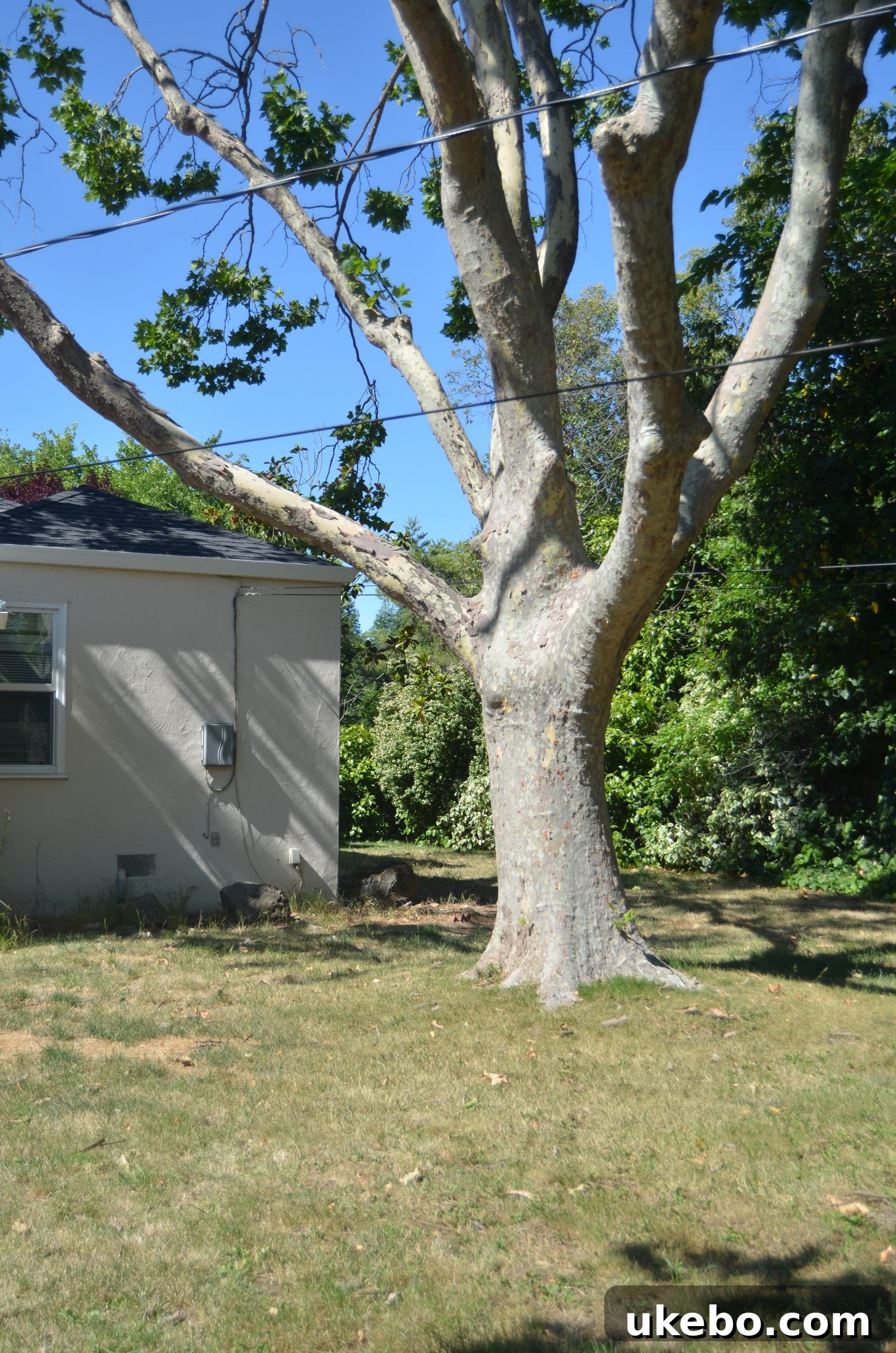
- The Sycamore Tree and its Root System: One of our most significant landscape features, and concurrently, one of our biggest challenges, is a large sycamore tree. Its extensive root system extends significantly into the proposed patio area. This requires careful consideration, as tree roots can cause uplift, cracking, and damage to many traditional hardscape surfaces. We need a solution that can either work harmoniously with or effectively bypass these root systems without harming the tree or compromising the patio’s integrity over time.
- Affordability and Budget: While we desire a beautiful and functional patio, cost-effectiveness remains a top priority. We are committed to finding hardscape materials and installation methods that align with a reasonable budget without sacrificing quality or longevity. Exploring DIY options will be crucial to keeping expenses in check, understanding the long-term value of our investment.
- DIY Potential: Our preference is to undertake as much of the work ourselves as possible. This not only helps manage costs but also provides a deep sense of accomplishment and ensures the project is executed with our specific vision in mind. Therefore, the chosen material should be relatively accessible for a skilled homeowner to install, even if it requires significant time and effort. We are prepared to invest our labor to achieve our dream patio.
Given these specific constraints and aspirations, we’ve explored several popular hardscape options, carefully weighing their pros, cons, and suitability for our unique backyard environment. Our goal is to select a material or combination of materials that offers the best balance of aesthetics, durability, affordability, and DIY feasibility, all while respecting the presence of our beloved sycamore tree and creating a sustainable, low-maintenance outdoor haven.
Exploring Hardscape Options: Pros, Cons, and DIY Feasibility
With our specific criteria in mind, let’s delve into the various hardscape options we’ve considered for our outdoor patio. Each material offers distinct advantages and disadvantages, particularly when viewed through the lens of affordability, DIY potential, and the challenge posed by the sycamore tree’s root system.
Pea Gravel Patio: A Budget-Friendly & Permeable Choice
via Modern Chemistry at Home
via Designing Idea
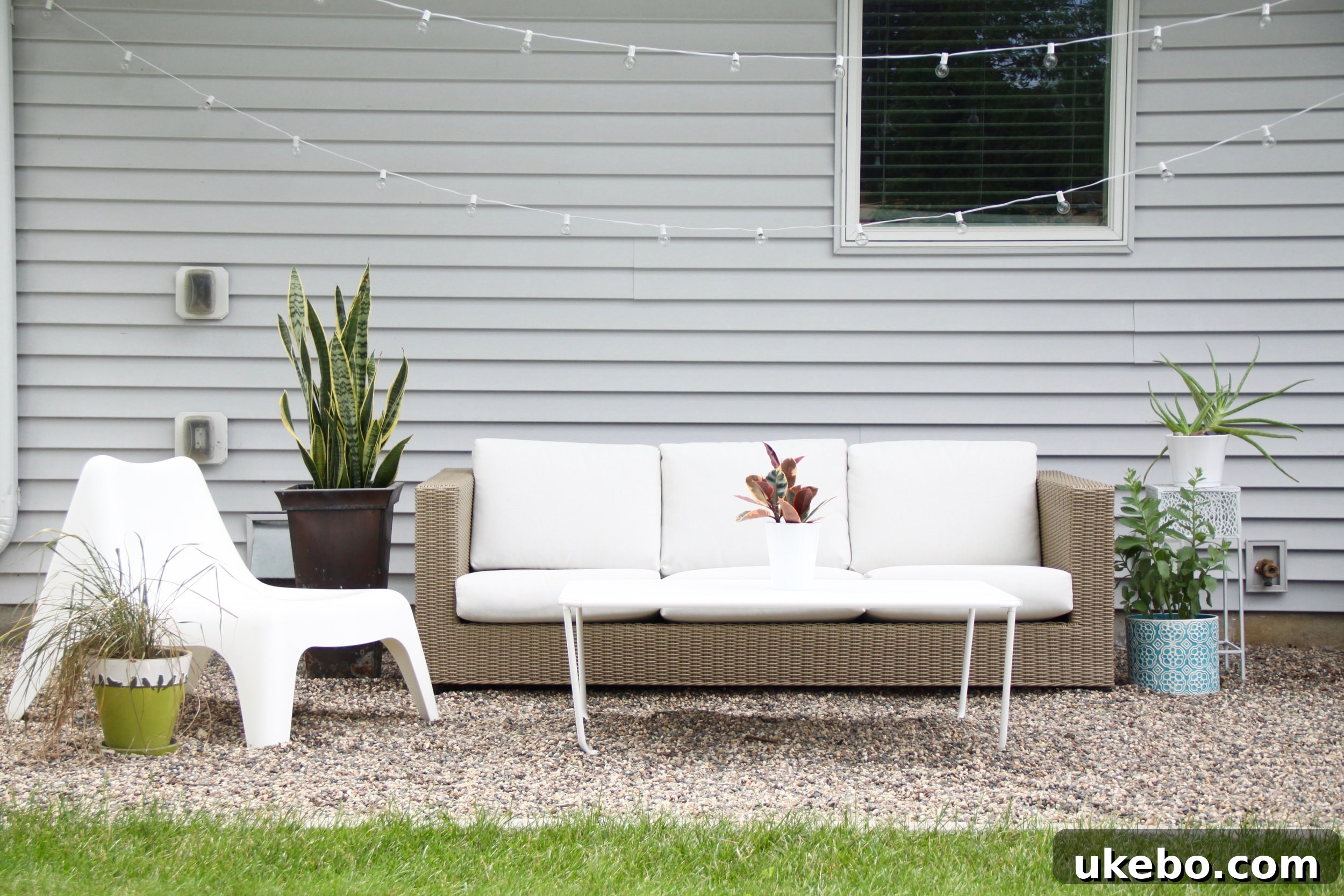
Pea gravel is undeniably a strong contender, perhaps even at the very top of our list, primarily due to its remarkable affordability. For homeowners looking to create a substantial patio on a budget, pea gravel offers an excellent solution, significantly reducing material costs compared to other hardscape options. Beyond the cost savings, it’s also considered one of the most DIY-friendly hardscape options, making it appealing for those eager to do the work themselves. The installation process typically involves preparing a level base, laying down landscape fabric to prevent weeds, and then spreading the gravel, which can be managed with basic tools and some manual labor, making it accessible even for novice DIYers.
However, despite its numerous advantages, pea gravel also raises several practical concerns that need to be addressed, especially for a high-traffic area. We often wonder about the ease of walking on it – will it feel stable underfoot, especially for guests wearing heels or children playing, or will it feel too loose? The stability of outdoor furniture, particularly chairs, is another important point; will chairs easily pull out and push in without sinking or getting caught, or will they constantly create frustrating divots? There’s also the common concern about pea gravel migrating into unwanted areas, such as garden beds, pathways, or even being tracked indoors on shoes. Finally, maintaining a consistently even surface over time, especially in a heavily used area, is a worry, as gravel can shift with foot traffic and weather. Solutions like proper edging, a well-compacted sub-base, and potentially even gravel stabilizer grids (cellular confinement systems) could help mitigate these issues, providing a more stable and contained surface while retaining its permeable benefits and natural aesthetic.
Decomposed Granite (DG): Natural Beauty with Practical Considerations
via Cupcakes & Cashmere
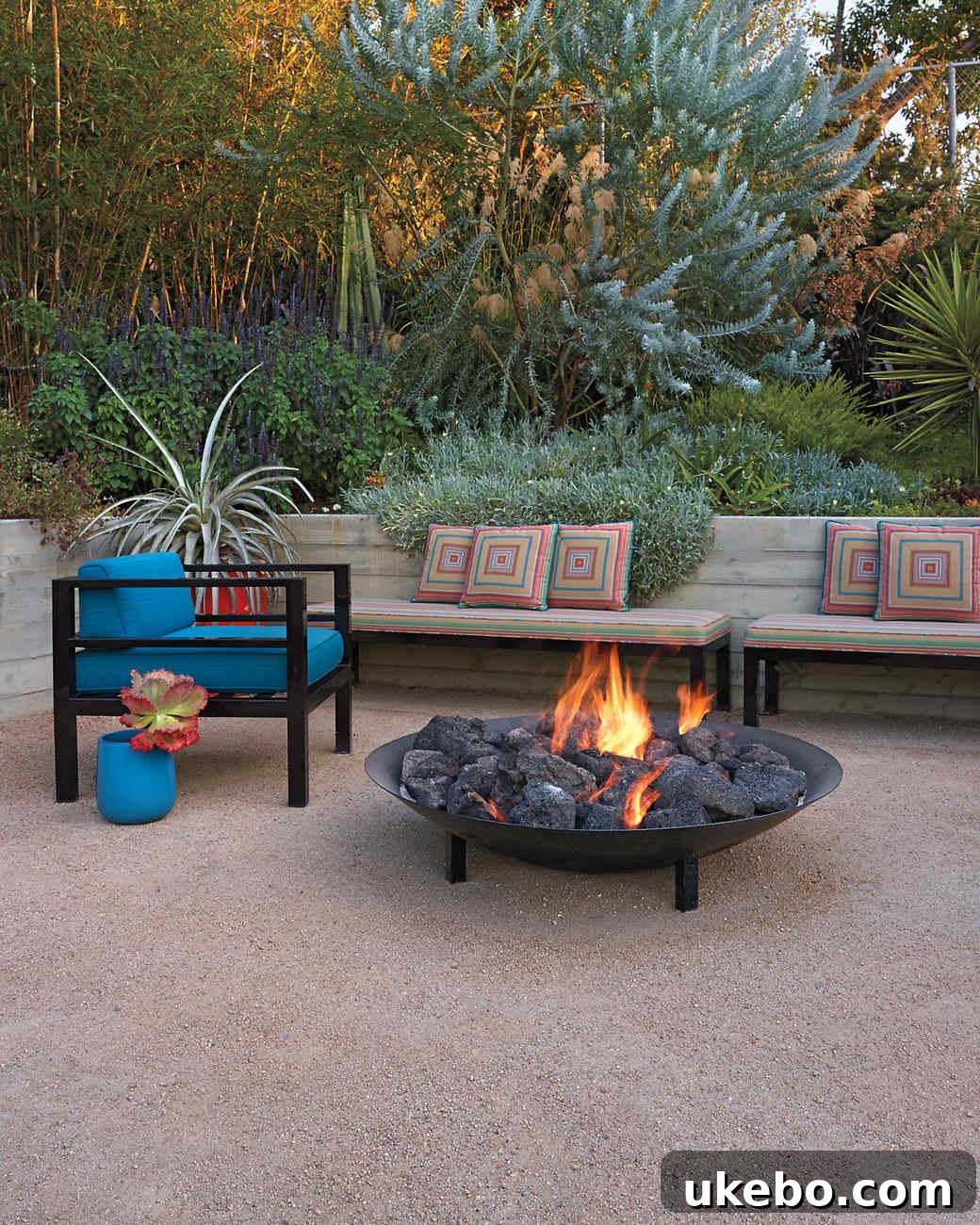
via Martha Stewart
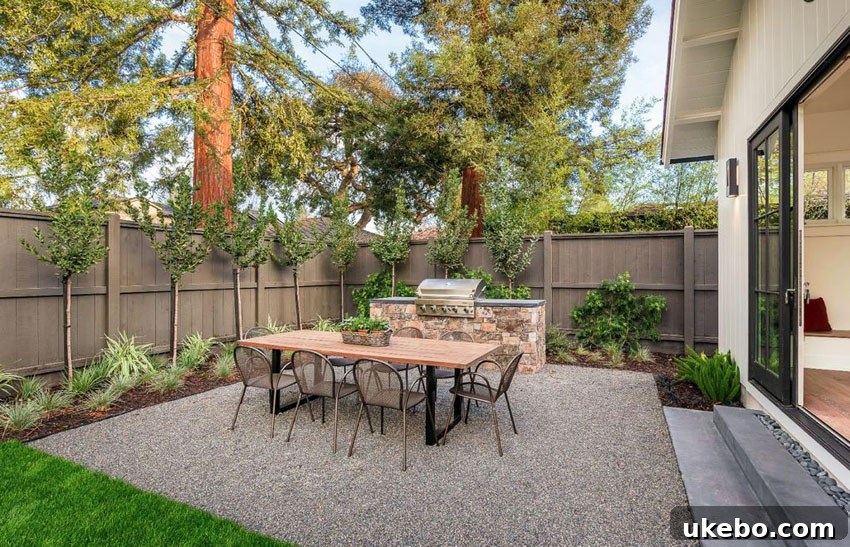
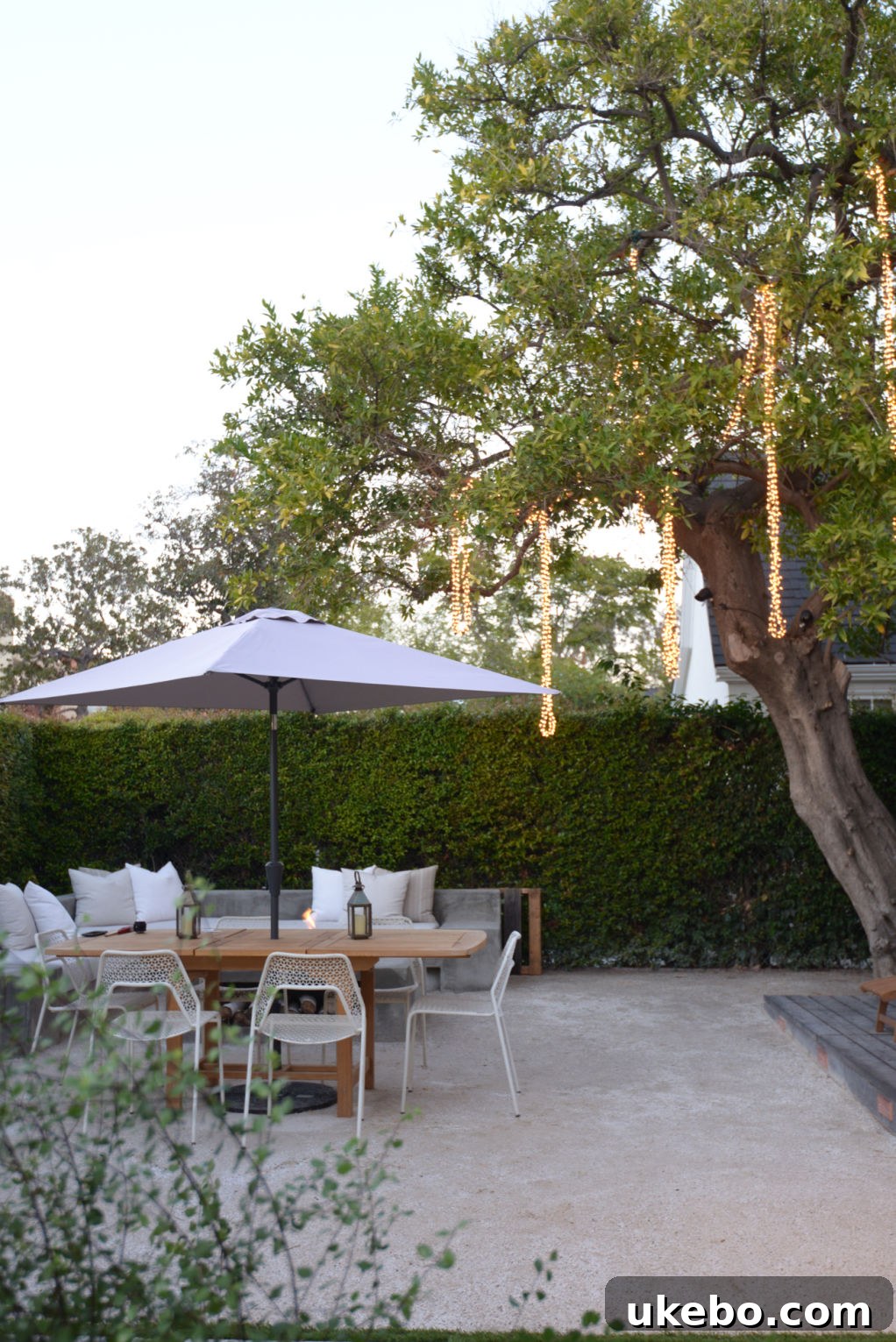
Decomposed granite (DG) holds a special place in our hearts for its absolutely stunning, natural aesthetic. It offers a soft, earthy look that blends seamlessly with the surrounding landscape, making it ideal for creating rustic, Mediterranean, or even modern organic-inspired outdoor spaces. When properly installed and compacted, especially the ‘stabilized’ varieties which include a binding agent, DG can create a firm, permeable surface that is more stable than loose gravel. This makes it an attractive option for pathways and patios where a natural, organic feel is desired. Its permeability is also a significant environmental benefit, allowing rainwater to soak into the ground rather than contributing to surface runoff, which is excellent for water management.
However, our enthusiasm for DG is tempered by some practical concerns. We’ve heard that traditional, unstabilized decomposed granite can get quite messy, especially in wet conditions, potentially tracking dust and fine particles indoors. This “messiness” is a significant drawback for a high-traffic area directly against the house, as constantly cleaning up tracked-in material is not ideal for a low-maintenance goal. While stabilized DG addresses some of these issues by binding the particles together, creating a firmer surface that is less prone to scattering and dusting, it often comes with a higher price tag. This brings us to another major concern: cost. Despite its natural appeal, we’ve consistently heard that decomposed granite, particularly the stabilized versions, can be surprisingly expensive, rivaling or even exceeding the cost of some paver installations once materials and professional labor (for proper compaction and grading) are factored in. The combination of potential mess (for unstabilized) and higher expense (for stabilized) makes us hesitant to commit to DG as our primary patio material, especially given our budget and the desire for a truly low-maintenance solution that won’t require daily tidying.
Patio Pavers: Durability, Style, and the Tree Root Dilemma
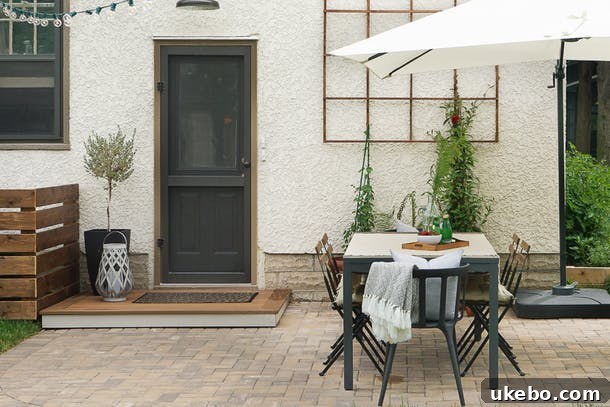
via Apartment Therapy
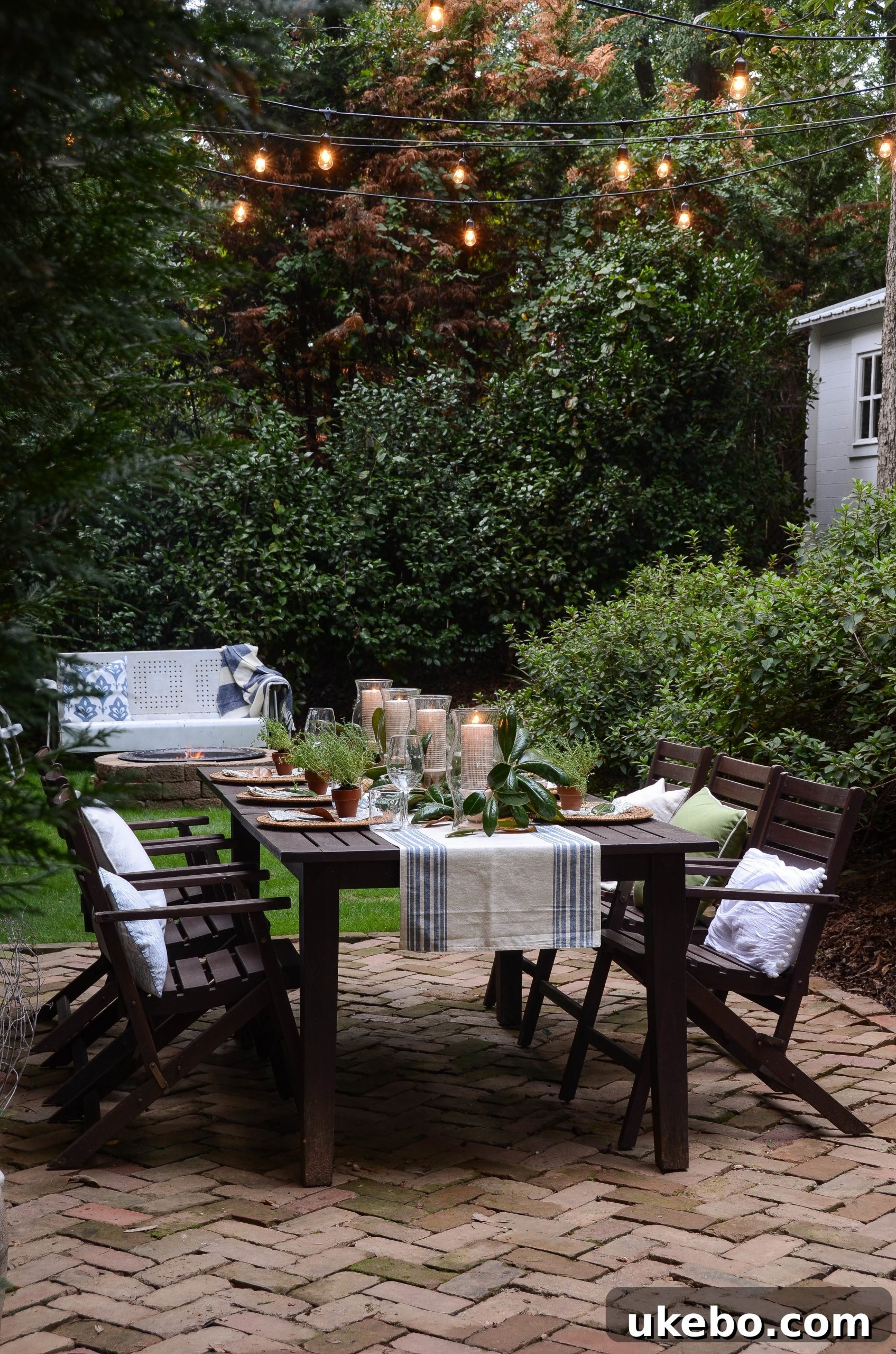
via Iron & Twine
For me, a patio constructed with pavers represents the most ideal solution. Pavers, whether concrete, brick, or natural stone, offer unparalleled durability, a vast array of design possibilities, and a stable, even surface that is perfect for dining, entertaining, and high-traffic areas. They create a finished, sophisticated look that adds significant value to a home and provides a truly “built” outdoor room. The variety in colors, shapes, and textures allows for immense creative freedom, from classic brick patterns to modern, large-format concrete slabs, ensuring a custom look for any aesthetic. Paver patios are also relatively low-maintenance once installed, requiring only occasional sweeping and joint sand replenishment, and their modular nature allows for easier repairs if an individual unit is damaged.
However, the significant drawbacks of pavers are primarily cost and the formidable challenge posed by our sycamore tree’s root system. The material cost for quality pavers can quickly add up, especially for a large patio area. Furthermore, the installation process is considerably more labor-intensive and requires meticulous base preparation, excavation, leveling, and cutting, which can escalate labor costs if professional help is needed. While DIY installation is certainly possible, it demands a higher skill level, more specialized tools (like plate compactors and wet saws), and a greater time commitment than gravel. Critically, tree roots are a major concern. Pavers, like concrete slabs, are prone to heaving and cracking when laid over active root systems. The expanding roots can lift individual pavers or entire sections, creating uneven surfaces that are not only tripping hazards but also compromise the patio’s integrity and drainage. While root barriers can be installed, they are not always a perfect solution and can be costly and labor-intensive to implement effectively without harming the tree or causing other issues. This inherent conflict with the tree roots makes a full paver patio a less straightforward option for our specific site, despite its many attractive qualities.
Concrete Slab Patio: The Conventional but Risky Route
While not originally on our immediate shortlist, a traditional poured concrete slab patio is a conventional option worth discussing due to its prevalence and perceived simplicity. Concrete offers a highly durable and solid surface that is relatively quick to install by professionals, and it can be customized with various finishes, colors, and stamps to mimic other materials like stone or tile. It provides a very stable base for furniture and is easy to clean, making it a low-maintenance choice for high-traffic areas. For a budget-conscious homeowner not dealing with significant root issues, a basic concrete slab can be an economical option compared to some paver installations.
However, concrete slabs present significant challenges for our project, particularly concerning the sycamore tree roots. Like pavers, concrete is highly susceptible to cracking and heaving when laid over active root systems. Once a concrete slab cracks, it’s often an expensive and difficult repair, frequently requiring demolition and repouring, and the new cracks may reappear if the root issue isn’t fully addressed. It also lacks the permeability of gravel or DG, contributing to surface runoff and potentially exacerbating drainage issues in heavy rains. The initial installation can be less DIY-friendly for larger areas, often requiring specialized equipment and professional expertise for proper pouring, leveling, and finishing to achieve a desirable, long-lasting result, which adds significantly to the overall cost. For these reasons, and especially given the severe tree root issue we face, a solid concrete slab is not a preferred option for us, as its rigid nature is fundamentally at odds with the dynamic environment of tree roots.
The Power of Combination: A Flexible and Functional Solution
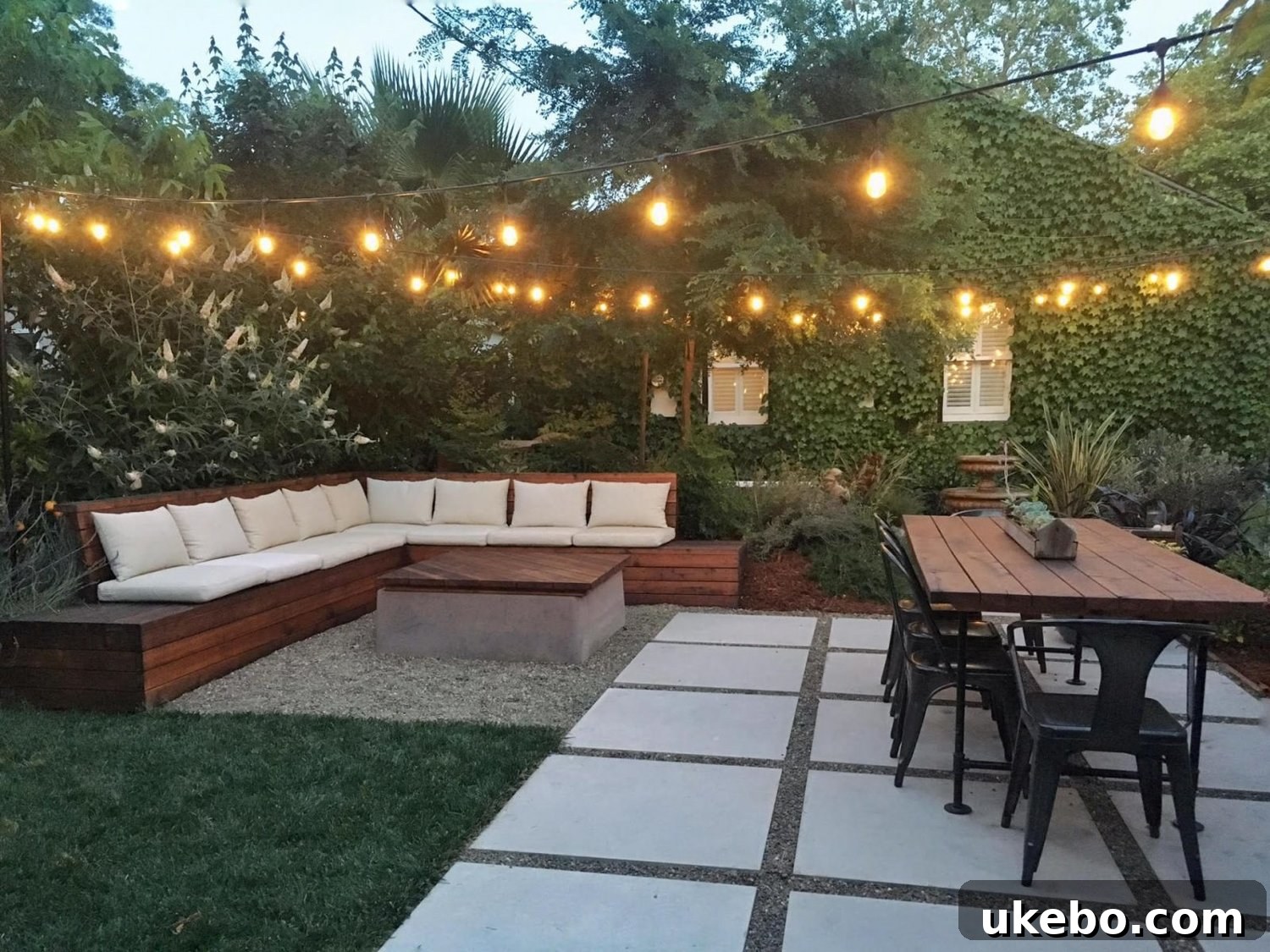
via East Sac Farms
I actually know Kyle and Morgan and have been in this backyard. It’s AMAZING! The combination works perfectly.
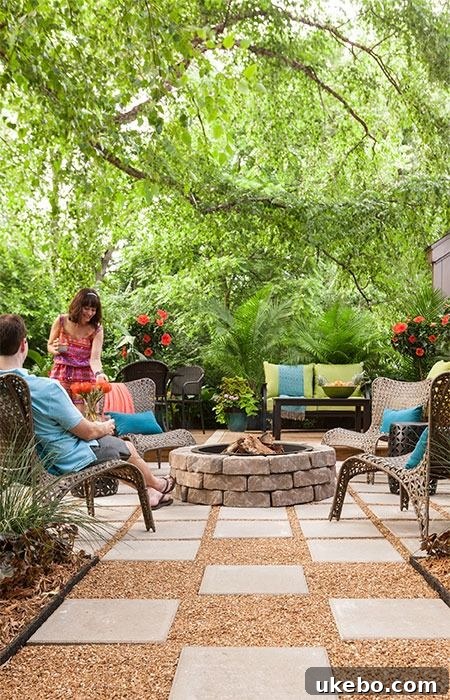
via Lowe’s Creative Ideas
After carefully evaluating each hardscape option, a combination approach is increasingly appealing and seems to offer the most practical and aesthetically pleasing solution for our backyard. By strategically blending different materials, we can leverage the strengths of each while mitigating their individual weaknesses, especially concerning cost, DIY feasibility, and the challenging presence of the sycamore tree’s root system. This hybrid design allows us to create distinct zones, each optimized for its function and environmental conditions.
We are strongly leaning towards a combination of pea gravel and pavers. This blend could work beautifully by utilizing pavers for the high-traffic zones closest to the house and for defined dining areas where stability is paramount. Pavers would provide that ideal, solid, and easily navigable surface for pulling chairs in and out, ensuring a comfortable and functional dining experience without the worry of sinking furniture or shifting material. This strategy also allows us to use pavers in areas less affected by the tree roots, or where roots can be more easily managed or avoided through careful planning and minor root pruning (done professionally, if necessary, and with caution).
Conversely, pea gravel could be employed in the larger, less trafficked areas, particularly around the perimeter or closer to the sycamore tree. Its inherent permeability and flexibility make it far more forgiving to tree roots, as they can grow beneath it without causing significant uplift or damage to the surface. Pea gravel would create a charming, natural-looking lounging area or a more informal pathway, offering a soft texture underfoot and excellent drainage. This approach significantly reduces the overall cost of the patio while still providing the stability needed for key functional zones. The contrast between the defined edges of pavers and the softer texture of gravel can also create a visually dynamic and sophisticated design, adding depth and interest to the outdoor space, making it feel intentionally designed and luxurious without the exorbitant price tag.
This flexible design allows for future expansion or modification, and it aligns perfectly with our desire for a budget-friendly, DIY-achievable project that respects the natural elements of our yard. By carefully planning the layout and considering the specific needs of each zone, we can create distinct areas for different activities, each optimized with the most appropriate hardscape material, resulting in a cohesive, beautiful, and highly functional outdoor oasis that we can enjoy for years to come. It’s a solution that promises both beauty and practicality, addressing our unique challenges effectively.
What are your thoughts, friends? We’d love to hear your experiences and advice on combining hardscape materials or tackling similar backyard challenges, especially those involving tricky tree roots or large DIY projects. Your insights are invaluable as we move forward with this exciting transformation!
Until next time, happy designing and outdoor living!