How to Make: Rosemary Oil for Hair
Also filed inPopular
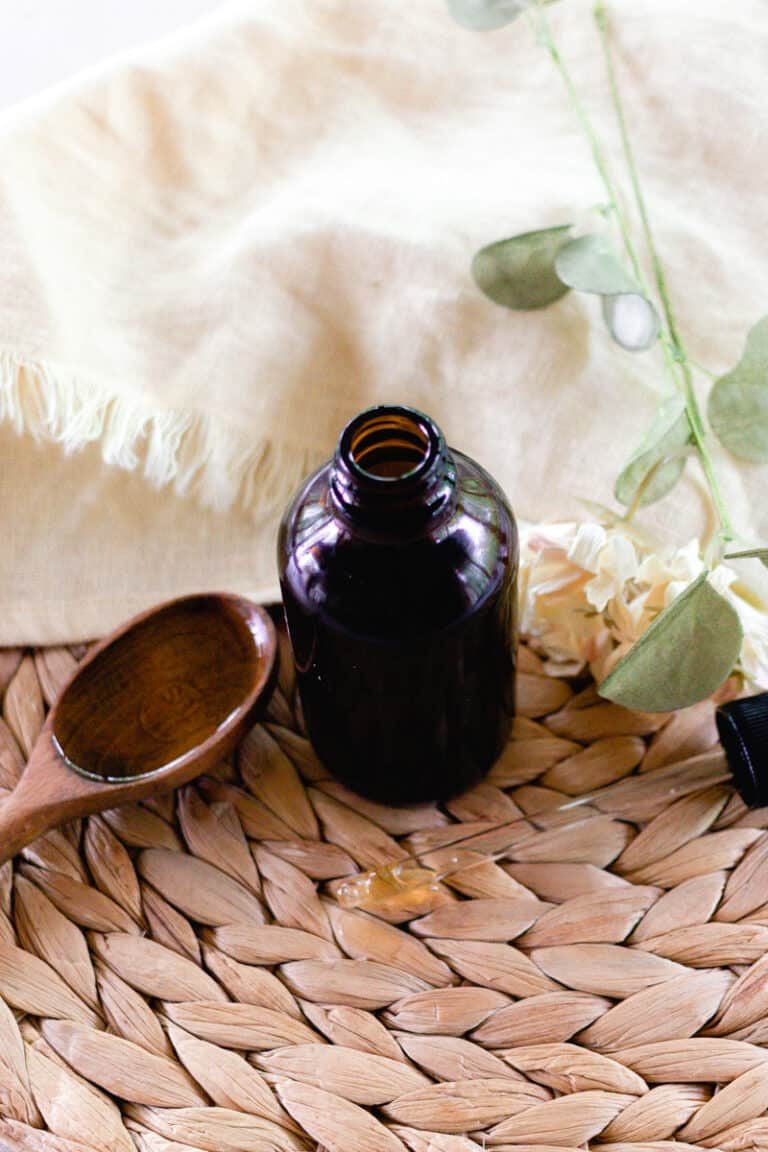
We have been making this rosemary oil for years, and it is one of those simple little things we would not want to be without. It is just dried rosemary and olive oil set on a sunny windowsill, and the sun does most of the work for you.
We go back and forth between this infused oil and our homemade rosemary water for hair, depending on our routine. They are close cousins, just used a little differently.
What we love most is how simple it is. You know we am all about keeping things easy, and this is about as easy as it gets.
What Is Rosemary Oil?
Rosemary oil is simply the leaves of the rosemary plant infused into a carrier oil. Those thin, twiggy little leaves carry the most wonderful fragrance, which is why you will find rosemary in everything from our homemade rosemary mint candles to homemade perfume.
One thing to get straight before we start. This is infused rosemary oil, not rosemary essential oil, and the two are used differently.
The infused oil here is gentle and ready to use straight away, while essential oil is concentrated and always needs to be diluted in a carrier oil first.
What Rosemary Oil Is Used For
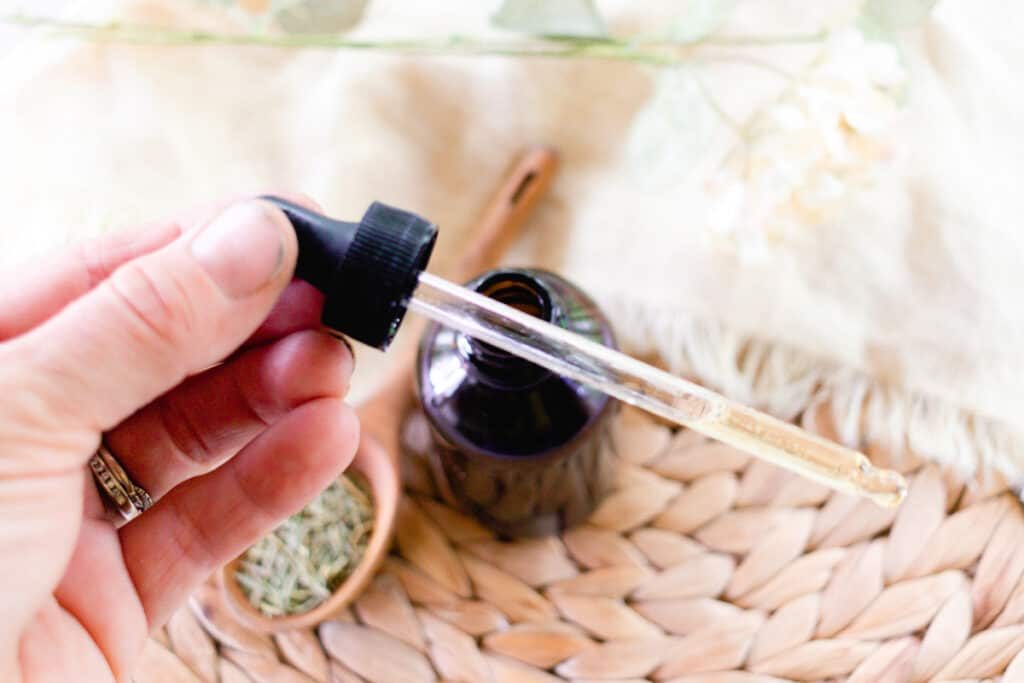
Rosemary oil earns its keep a few ways around here. It is a lovely, conditioning oil to work through your hair and ends for softness and shine, it makes a simple, nourishing body or massage oil, and the fresh herbal scent is wonderful in candles, a room spray, or a little perfume.
Why You Will Love This Recipe
- It could not be simpler. You combine dried rosemary and olive oil, set it on a sunny windowsill, and let it infuse, the same easy way we make the oil for our homemade dandelion salve.
- It is endlessly useful. Hair, skin, and scent around the home, this little oil does a bit of everything.
- It costs next to nothing. If you have rosemary growing in the garden, it is practically free.
How to Make Rosemary Oil
Here is everything you need:
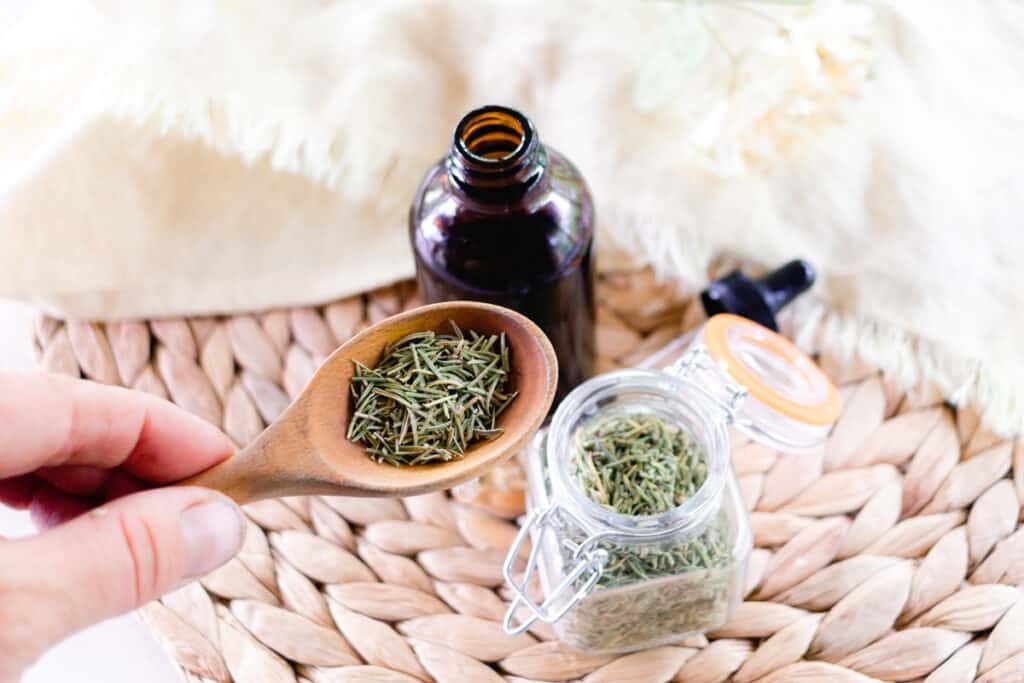
- Dried rosemary leaves (whole, not ground)
- Extra virgin olive oil
- An 8-ounce glass jar
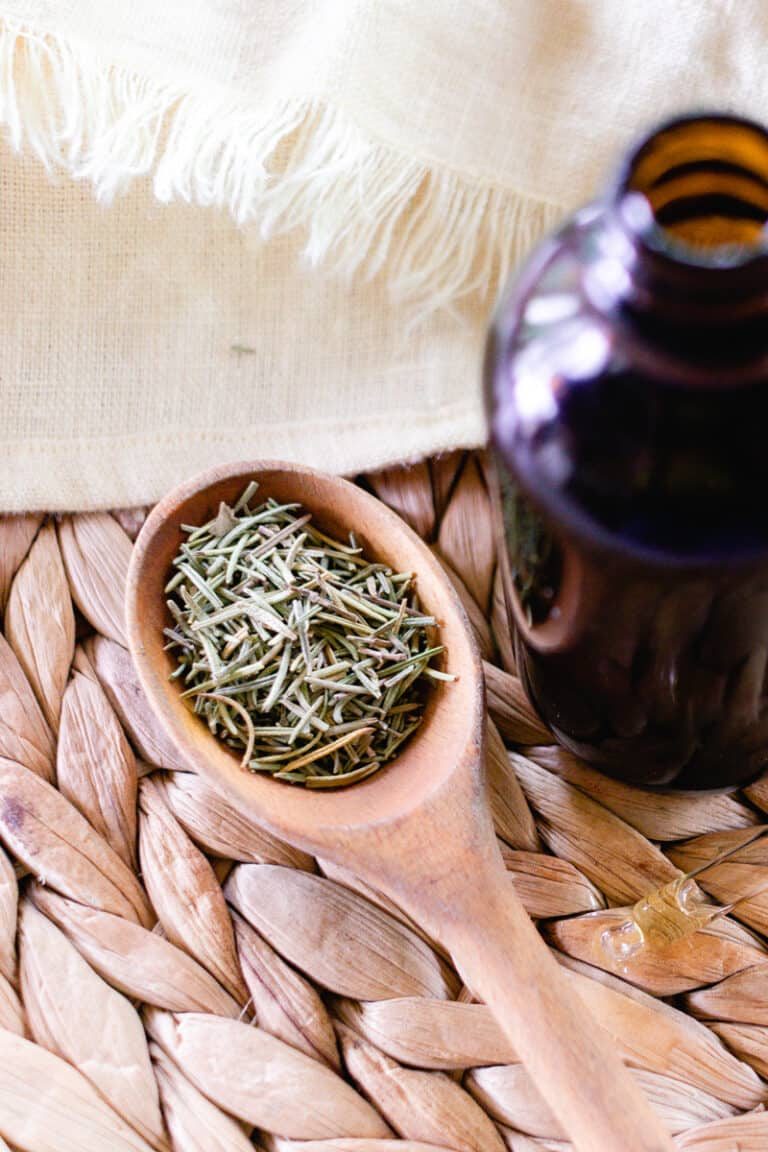
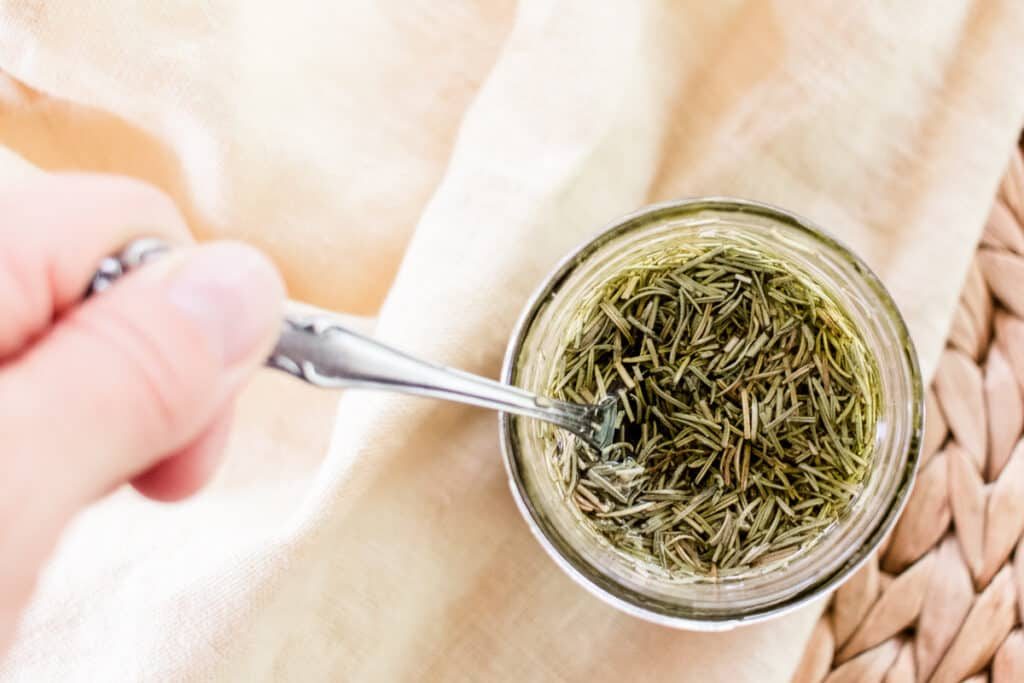
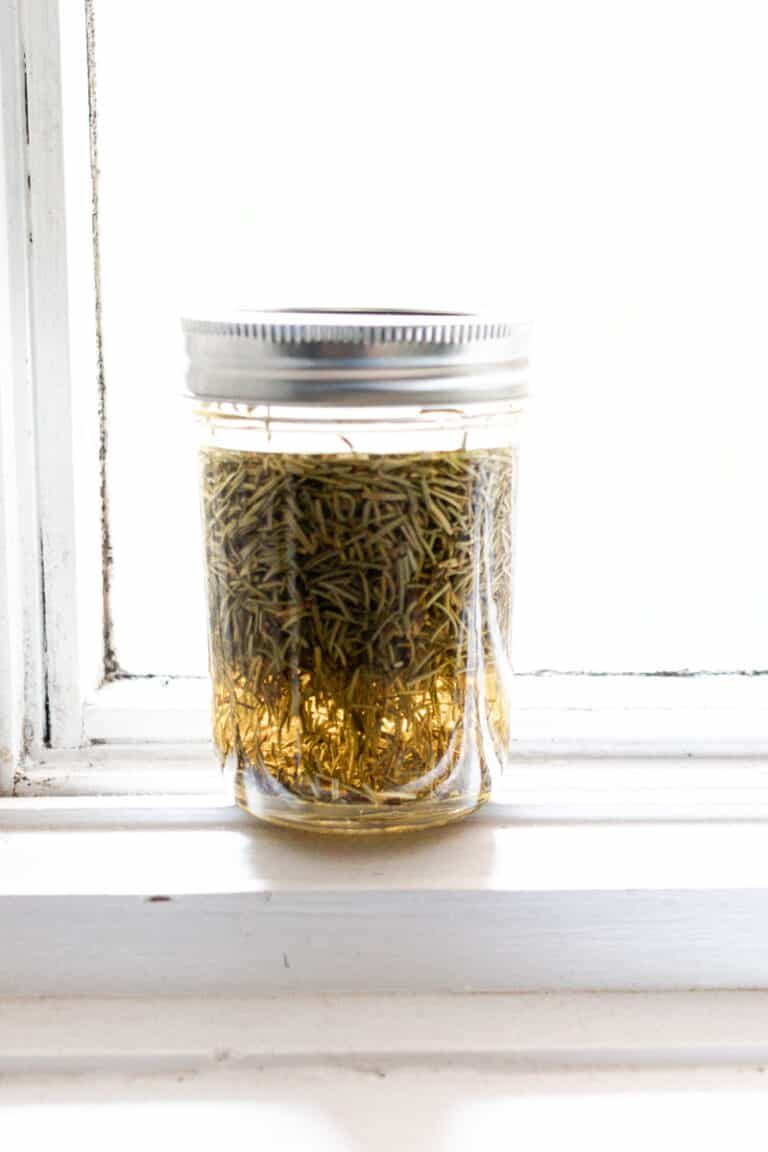
Fill the jar about one-third of the way with dried rosemary leaves, then top it off with olive oil. Give it a stir so the leaves are fully covered, secure the lid, and set it on a sunny windowsill for up to a month.
Give the jar a gentle shake every few days when you think of it. When it is done, strain out the leaves through a fine mesh sieve or cheesecloth, and your infused oil is ready.
The Quick Stovetop Method
The sunny-windowsill version is our favorite, but we know a month feels like forever when your hair is ready now. Here is the faster way to make it right on the stove.
- Add your dried rosemary and olive oil to a small saucepan, or to a heat-safe bowl set over a pot of simmering water.
- Warm it on the lowest heat for 30 minutes to an hour, keeping it gently warm and never letting it bubble or fry.
- Turn off the heat, let it cool, then strain out every bit of rosemary.
It will not be quite as strong as a slow infusion, but it is ready the same day. Keep the heat low the whole time, since oil that gets too hot can turn bitter.
Best Carrier Oils to Use
We reach for olive oil because it is what we always have on hand, but rosemary infuses beautifully into almost any carrier oil. Pick one based on your hair and what you like:
- Olive oil is rich, easy to find, and our everyday pick.
- Jojoba oil is light and close to your scalp’s own oils, so it soaks in quickly.
- Coconut or fractionated coconut oil is light and lasts a long time on the shelf.
- Castor oil is thick, so a lot of people blend a spoonful into a lighter oil.
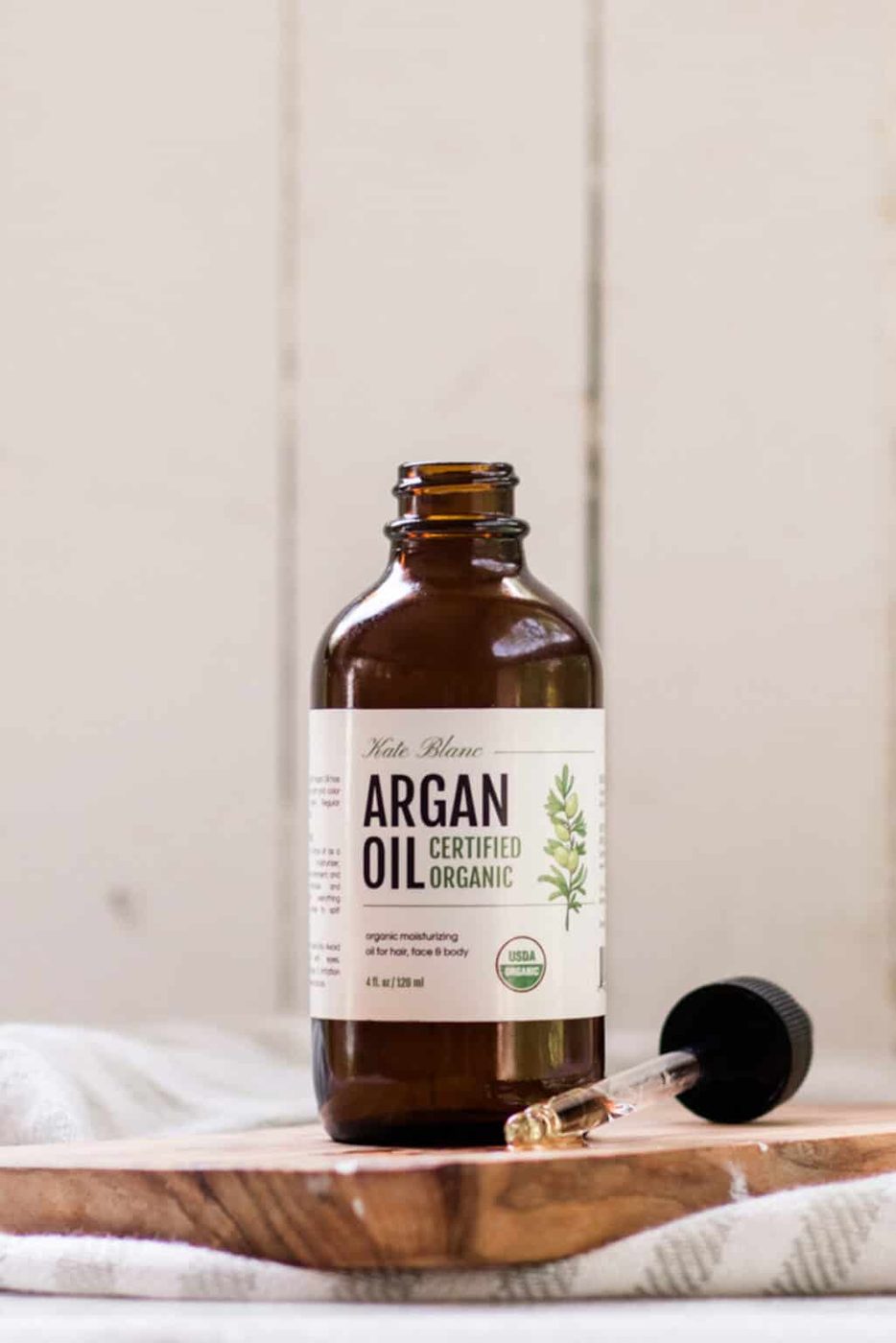
- Argan or sweet almond oil are lightweight and lovely for finer hair or the ends.
How to Use Your Rosemary Oil
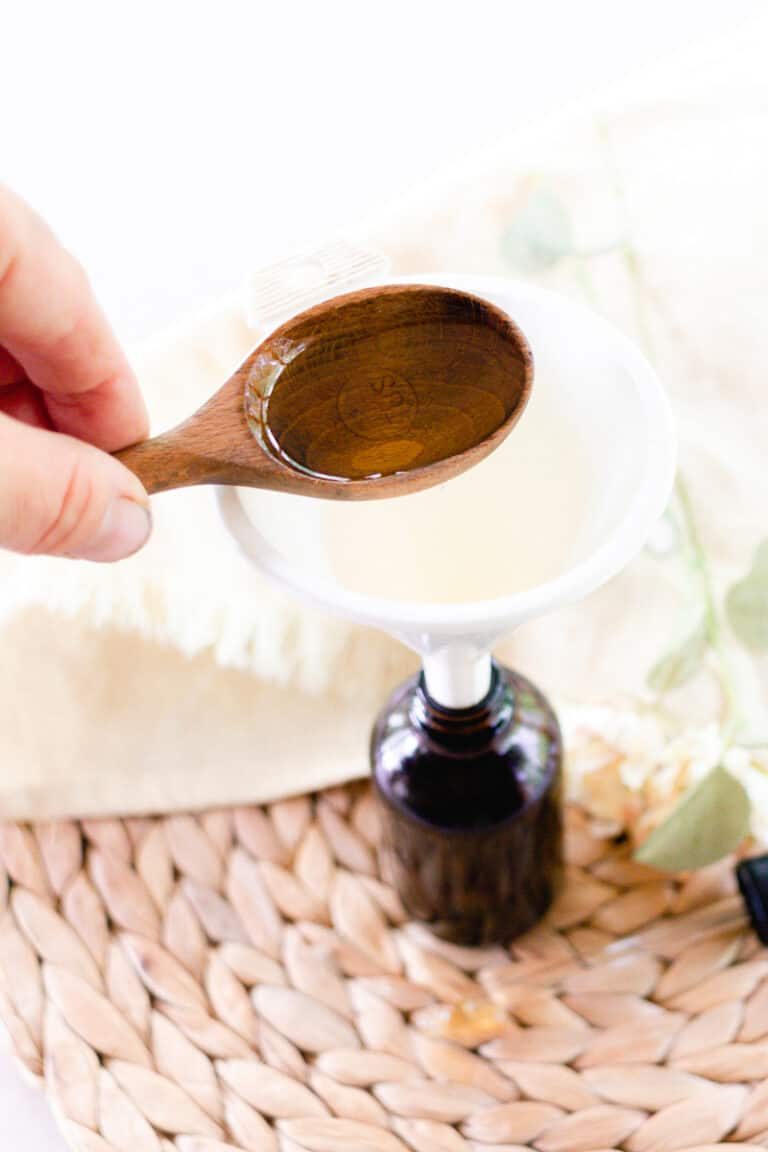
On your hair, warm a little between your palms and massage it into your scalp, then comb it through to the ends. Leave it on for 30 minutes or so, or even overnight, then wash as usual, the same way we use our homemade hair moisturizer on dry ends.
It layers nicely with the rest of our hair routine too, like our homemade conditioner and homemade shampoo. On your skin, it makes a simple DIY massage oil or DIY body oil with that fresh herbal scent.
You can also use it as a pre-wash treatment. Work a little through your hair an hour or so before you shampoo, and it comes out feeling that much softer.
Rosemary Oil vs Rosemary Water
If you have been down the rosemary rabbit hole, you have probably seen both this infused oil and our homemade rosemary water for hair and wondered which one you actually need. Honestly, we use both, just for different things.
The infused oil is richer and more of a treat. We massage it into our scalp and ends, leave it a while, then wash it out, so it is our go-to for a deeper, more nourishing feel.
The water is lighter and quicker. It is a gentle mist we can spritz on any day without weighing our hair down, more of an everyday pick-me-up than a treatment.
Neither one is a magic fix, and we would never tell you otherwise. They are simple, natural little additions to a hair routine, and there is no reason you cannot enjoy both.
Variations to Try
Once you have the basic infused oil down, it is fun to make it your own. We have not tested every combination below myself, so treat them as ideas to play with:
- Add other herbs. A little dried peppermint, lavender, or cedarwood infused right alongside the rosemary adds a lovely change of scent.
- Add a few drops of essential oil. For a stronger scent, stir rosemary essential oil into the finished carrier oil, starting with about 6 to 12 drops per ounce.
- Add vitamin E. A little vitamin E oil is a natural antioxidant that helps your infused oil keep longer.
- Try other infused oils. The same method works for homemade calendula oil and beyond.
How Long It Lasts
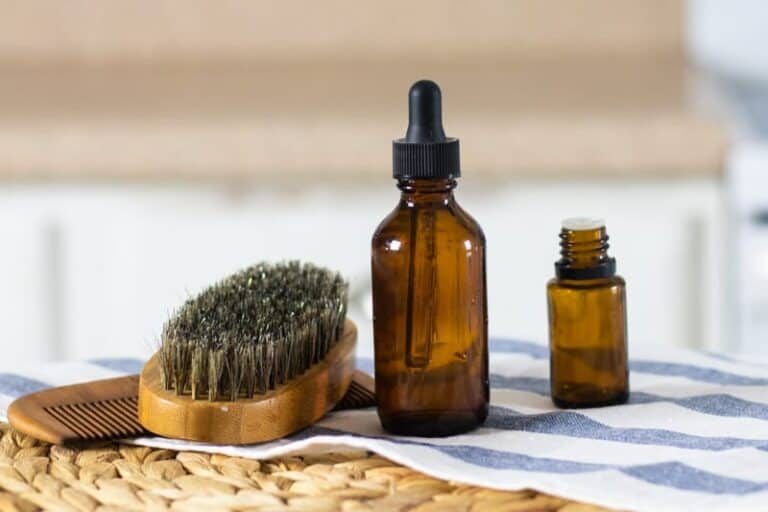
Store your finished oil in a clean, dry bottle somewhere cool and out of the sun, and it will keep for several months. The one rule is to keep water out of it, since any moisture is what leads to spoilage, so always use dried rosemary and a fully dry jar.
Common Mistakes to Avoid
A few little things trip people up with infused oils, so here is what to watch for. Getting these right is the difference between an oil that lasts and one that goes off early.
- Using fresh rosemary. Fresh leaves hold water, and water is what makes oil spoil, so always dry your rosemary fully first.
- Letting the oil get too hot. On the stovetop, keep it barely warm, since high heat can scorch the herbs and turn the oil bitter.
- Not straining well. Leftover bits of rosemary can mold, so strain thoroughly through a fine mesh or cheesecloth before you bottle it up.
A Few Safety Tips
- Do a small patch test on your skin before the first use, in case you are sensitive to rosemary.
- Remember that infused rosemary oil and rosemary essential oil are not the same. Essential oil must always be diluted first.
- Label your bottle with the date you made it, and keep it out of reach of children.
More Natural Hair Recipes to Try
- DIY protein hair treatment
- how to use black seed oil for hair
- how to lighten your hair naturally
- homemade night cream
Rosemary Oil FAQs
Can we use fresh rosemary to make rosemary oil?It is safest to use dried rosemary, since the water in fresh herbs can make your oil spoil. If you only have fresh, let it dry out fully first, or use the quick stovetop method and use the oil up quickly.
Which carrier oil is best for rosemary oil?There is no single best one, it comes down to your hair and what you like, though olive, jojoba, and coconut are the most popular. Castor is a favorite to blend in, just mix it with a lighter oil since it is so thick.
Can you leave rosemary oil in your hair overnight?Yes, a lot of people massage it into the scalp and leave it on overnight. Just wrap your hair or use an old pillowcase, since the oil can leave marks.
What is the difference between rosemary oil and rosemary essential oil?The infused oil in this recipe is rosemary steeped in a carrier oil, so it is gentle and ready to use. Rosemary essential oil is a concentrated extract that always has to be diluted in a carrier oil first.
How long does it take to make rosemary oil?With the sunny-windowsill method it infuses over about a month, and with the quick stovetop method it is ready the same day. The slow version tends to have a stronger scent, but both work well.
How long does homemade rosemary oil last?Kept in a clean, dry bottle somewhere cool and dark, it will usually keep for several months. Just keep water out of it, since moisture is what leads to spoilage.
Do you put rosemary oil on wet or dry hair?Either works, though a lot of people like to warm it and massage it into a dry scalp before washing. On damp hair, a little smoothed over the ends helps with softness and shine.
How often should you use rosemary oil in your hair?For most hair, once or twice a week is plenty, and you can adjust from there. If your hair leans oily, start with less and keep it mostly on the ends rather than the scalp.
Can we use rosemary oil and rosemary water together?Absolutely, they complement each other nicely. A lot of people use the oil as a weekly treatment and the water as a lighter everyday mist.
If you tried this Homemade Rosemary Oil or any other tutorial on our website, please leave a 🌟 star rating and let me know how it went in the 📝 comments below. Thanks for visiting!
5 from 14 votesHow to Make Rosemary Oil
By the studio Ascher Prep: 5 minutes minsCook: 2 minutes minsTotal: 7 minutes mins Servings: 4 ounces SaveSaved Pin Print Enjoy making this simple Rosemary oil. It takes minutes to make and if ready to use after just one month of infusing!
 Equipment
- 8 ounce glass jar
Ingredients
- ⅛ cup dried rosemary leaves, approxamtely
- 6 ounces extra virgin olive oil, approximately
Instructions
- Fill the jar one-third of the way with dried Rosemary leaves. Be sure to use whole leaves and not ground or powdered versions.
- Add the olive oil to fill the jar.
- Secure the lid and place it on a sunny window sill for up to a month.
- Once a month is gone by, strain the leaves from the olive oil and store it in an airtight glass bottle.
- Use for up to 6 months – but dispose of it if the smell turns rancid.