
Designing Your Dream Kitchen: Innovative Ideas for the Heart of Your Home
Welcome to a journey into the heart of the home – the kitchen. For many, the kitchen isn’t just a space for culinary creation; it’s a vibrant hub for family gatherings, heartfelt conversations, and the creation of lasting memories. As we navigate through life and homes, the vision of the perfect “forever kitchen” often takes shape, evolving with our needs and dreams. While our current living situations may be temporary, the quest for that ultimate kitchen is a continuous source of inspiration and excitement, driving us to explore innovative designs and functional solutions.
Our ongoing fascination with kitchen design is more than just a passing trend; it’s a deep dive into functionality, aesthetics, and personal lifestyle integration. The idea of a “forever kitchen” isn’t merely about size or luxury; it’s about crafting a space that truly reflects who you are, anticipates your future needs, and remains timeless in its appeal and utility. It’s a space where every detail, from the layout to the finishes, is meticulously chosen to enhance daily living and elevate the home experience, making it a true centerpiece of your abode.
Crafting Your Forever Kitchen: Essential Must-Have Features
As we compile a comprehensive wish list for our ultimate kitchen, certain features consistently emerge as non-negotiable must-haves. These elements are chosen not only for their visual appeal but for their profound impact on the kitchen’s functionality, ambiance, and connection to the wider home environment. Let’s explore some of these foundational components that define a truly exceptional dream kitchen, ensuring it stands the test of time both in style and practicality.
Embracing Natural Light and Views: The Alluring Wall of Windows
Imagine a kitchen consistently bathed in an abundance of natural light, offering expansive, unobstructed views of the outdoors. A full wall of windows is a paramount feature for the forever kitchen, transforming the space into an airy, inviting sanctuary. Beyond aesthetics, the benefits are immense: natural light reduces the need for artificial lighting during the day, significantly contributing to energy efficiency. It also fosters a profound sense of openness, making even compact kitchens feel considerably larger and more intimately connected to nature. Strategic placement can frame beautiful garden vistas or architectural landscapes, effectively turning the kitchen into a dynamic living art piece. Careful consideration for privacy, perhaps through strategic landscaping or elegant window treatments, alongside high-performance insulation, ensures comfort and utility across all seasons.
Seamless Indoor-Outdoor Living: French Doors to a Kitchen Garden
To further enhance the cherished connection with the outdoors, the inclusion of elegant French doors leading to a small, dedicated outdoor space is another absolute essential. This isn’t just about convenient egress; it’s about creating a harmonious transition to a thriving kitchen garden. Picture stepping out just a few feet from your cooking station to pluck fresh, aromatic herbs, vibrant salad greens, or sun-ripened cherry tomatoes for your meal. This seamless integration of indoor culinary activities with outdoor cultivation not only promotes a healthy, sustainable lifestyle but also adds an unparalleled level of freshness and flavor to your dishes. The adjacent outdoor space itself can be thoughtfully designed as a charming extension of the kitchen, perhaps featuring a small patio perfect for morning coffee or a dedicated grilling area, making outdoor dining and entertaining effortlessly accessible and enjoyable.
Modern Aesthetics & Practicality: The Charm of Floating Upper Shelves
Moving inside, the design philosophy for the forever kitchen leans heavily towards minimalist elegance and heightened functionality. Floating upper shelves, strategically replacing bulky, traditional enclosed upper cabinets, are a crucial element in achieving this vision. This design choice immediately opens up the kitchen, creating an uncluttered, spacious, and airy feel that promotes a sense of calm. They offer the perfect opportunity to display a curated collection of beautiful dinnerware, cherished decorative items, or frequently used spices in an aesthetically pleasing manner. While some might express concerns about dust accumulation or the need for constant tidiness, thoughtful styling and a focus on essential, visually appealing items can effectively mitigate these worries. The absence of traditional cabinets also liberates wall space, allowing for more creative and expansive wall treatments, such as stunning full-height tile backsplashes that extend all the way to the ceiling, becoming a captivating focal point of the design.
Ergonomic Efficiency & Smart Organization: Lower Drawers Instead of Cabinets
Finally, for the lower half of the kitchen, the preference shifts decisively from traditional base cabinets to an array of deep, easily accessible drawers. This is a true game-changer for kitchen organization, efficiency, and ergonomics. No more bending down and rummaging through the dark, inaccessible depths of traditional cabinets; everything from heavy pots and pans to delicate serving dishes and everyday pantry staples can be neatly organized and retrieved with remarkable ease. Modern drawer systems often feature advanced soft-close mechanisms, full-extension slides, and customizable internal dividers, maximizing storage efficiency and ensuring items remain in their designated places without shifting. This design choice dramatically improves accessibility, particularly for heavier or less frequently used items, and significantly contributes to a more intuitive, streamlined, and ultimately more enjoyable cooking experience for everyone.
Rethinking Kitchen Layouts: The Innovative Integrated Dining Table
While some features for the dream kitchen are firmly established, others remain open for innovative interpretation and personal preference. One such compelling concept that has sparked considerable debate and intrigue is the idea of incorporating the dining table directly into the kitchen layout, rather than relegating it to a separate, formally defined dining room. This approach fundamentally challenges conventional kitchen design, offering compelling advantages and unique design opportunities that deserve careful consideration for modern living.
Our current home, like many contemporary designs, features an open-plan kitchen and dining area, yet the spaces are often subtly delineated, with a central kitchen island acting as a soft divider. However, the idea of a truly integrated dining space, where the table is an intrinsic, seamless part of the kitchen’s functional core, is remarkably captivating and offers a fresh perspective on home dynamics. This concept, far from being entirely new, echoes a timeless design philosophy seen in many traditional homes across generations. My grandmother’s kitchen, for instance – which, incidentally, remains a charming time capsule from my father’s childhood, virtually unchanged for decades – prominently featured a large dining table right in its bustling center. In her cozy home, devoid of a formal dining room, the table served as the indispensable heart of daily life, hosting countless family meals, spontaneous gatherings, and cherished memories, purely out of functional necessity and the desire for closeness.
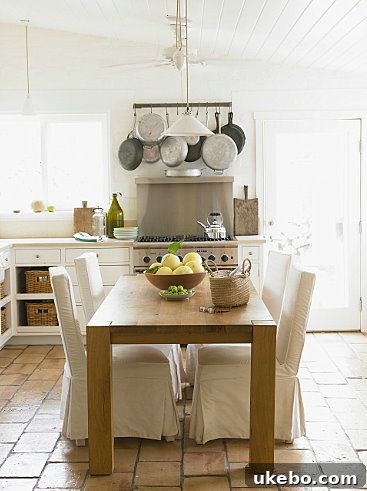
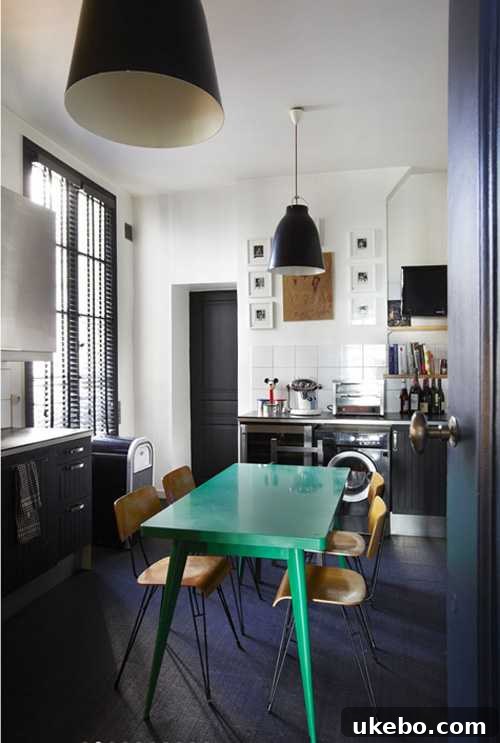
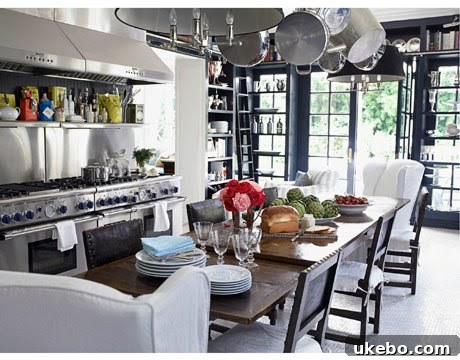
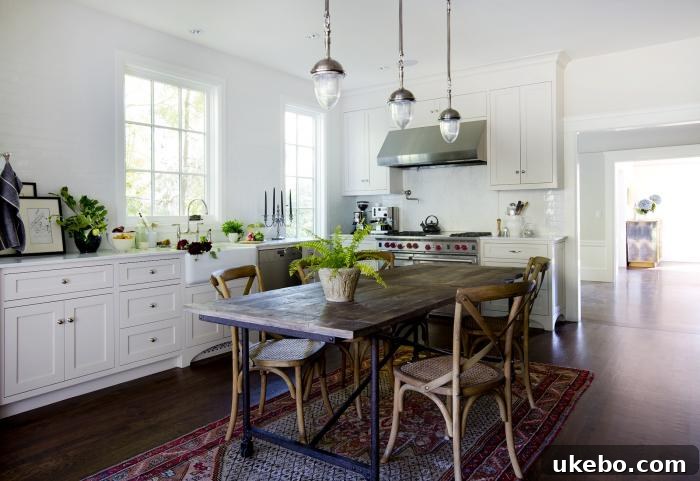
Even today, there’s an undeniable charm and profound practical appeal to positioning the dining table squarely within the kitchen. It transforms the space into a true nexus of domestic activity, naturally encouraging greater interaction, communication, and connection among family members and guests. These inspiring examples below beautifully illustrate just how effectively and aesthetically this concept can be executed, showcasing modern kitchens where the dining table isn’t merely an afterthought but a central, integral design element that enhances both form and function:
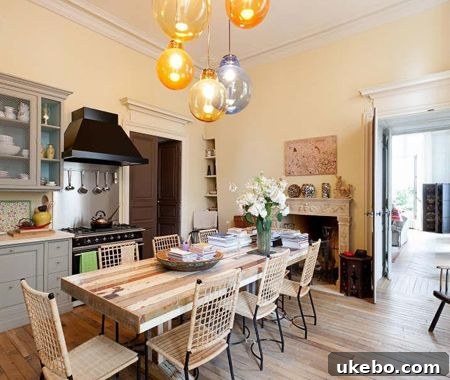
Advantages of an Integrated Kitchen Dining Table
- **Enhanced Connection and Communication:** By placing the dining table directly within the kitchen’s activity zone, family members and guests are naturally drawn closer together. This fosters more spontaneous conversations and allows cooks to remain an active part of the social dynamic while efficiently preparing meals.
- **Optimized Space Utilization:** For homes with smaller footprints or expansive open-concept layouts, an integrated table can be a brilliant space-saving solution. It skillfully eliminates the need for a separate, often underutilized, formal dining room, thereby merging two crucial functions into one highly efficient and dynamic area.
- **Informal & Welcoming Atmosphere:** This particular layout inherently promotes a more relaxed and casual dining experience, which is perfect for everyday family meals and less formal entertaining. It effectively removes the stiffness sometimes associated with traditional dining rooms, cultivating a warm, inviting, and truly lived-in ambiance.
- **Streamlined Serving and Clean-up:** The close proximity of the dining surface to the prep and cooking zones makes serving meals incredibly convenient, minimizing the effort and distance required to transport dishes. Similarly, clearing the table after meals becomes a much quicker and more efficient process.
- **Versatile Functionality:** Beyond its primary use for dining, the integrated table can effortlessly double as an additional workspace for extensive meal preparation, a dedicated homework station for children, or simply a general gathering spot, thus rendering the kitchen truly multi-functional and adaptable to various household needs.
Potential Disadvantages and Important Considerations
- **Clutter Management Challenges:** With cooking, meal prep, and dining all occurring in such close proximity, maintaining a consistently tidy space can become more challenging. Spills, cooking paraphernalia, and dining essentials might easily commingle, necessitating diligent and frequent clean-up.
- **Defining Spatial Zones:** For those who strongly prefer distinct separation between cooking, dining, and living areas for psychological or practical reasons, an integrated table might feel too open or less formal. It can blur the traditional lines of functional zones within the home.
- **The “Island” Dilemma:** If you are deeply committed to the idea of a large, freestanding kitchen island for extensive prep, casual bar-height seating, and substantial additional storage, integrating a dining table might necessitate a significant compromise or a completely different approach to the island concept. Finding a design that effectively incorporates both a generous island and a full-height dining table can be spatially complex in many kitchen layouts.
- **Achieving Aesthetic Cohesion:** Successfully achieving a cohesive and harmonious look where the dining table feels intentionally integrated rather than merely placed can demand careful and thoughtful design planning, meticulous material selection, and deliberate furniture choices to ensure a seamless aesthetic.
- **Formal Dining Requirements:** For those who frequently host formal dinner parties, holidays, or prefer a dedicated, more elegant and refined dining setting separate from the day-to-day kitchen activities, this inherently more informal integrated approach might not fully satisfy their entertaining requirements.
Balancing the Island vs. Integrated Table Dilemma
The choice between a traditional, standalone kitchen island and a seamlessly integrated dining table often presents a significant design dilemma for homeowners. While a classic kitchen island offers extensive additional counter space for meal preparation, extra storage solutions, and typically a casual breakfast bar for quick bites, an integrated dining table fosters a uniquely different kind of interaction and flow within the kitchen space. However, it is entirely possible, and increasingly popular, to have elements of both in a well-designed kitchen.
Many innovative contemporary designs now feature a kitchen island that gracefully extends into a dining table, either at the same counter height for a uniform look or at a lower, more comfortable standard dining height. This sophisticated hybrid approach can often offer the best of both worlds: providing ample dedicated prep space on the island while seamlessly transitioning into a comfortable and inviting dining zone. This allows for both distinct functionality and cohesive aesthetics.
Ultimately, the decision hinges on a careful evaluation of your specific lifestyle, your entertaining habits, and the overall dimensions and unique layout of your home. Are you a frequent entertainer who prioritizes a large, open prep area with bar seating, or do you place a greater emphasis on intimate family meals and a cozy, deeply connected kitchen atmosphere? Answering these fundamental questions honestly will serve as your guiding compass, helping you make an informed choice and enabling you to create a kitchen that truly serves your unique needs and aspirations, becoming a beloved and central part of your home.
Beyond the Basics: Enhancing Your Dream Kitchen with Smart Features
As we continue to refine the vision for our forever kitchen, it’s worth exploring other crucial elements that can elevate the space from merely functional to truly exceptional. These aspects address everything from intelligent storage and cutting-edge technology to sophisticated aesthetics and sustainable practices, ensuring every detail contributes to a cohesive, inspiring, and highly efficient design that stands the test of time.
Smart Storage Solutions: The Transformative Power of a Well-Organized Pantry
A dream kitchen extends far beyond just visible elements to encompass intelligent, often hidden, storage solutions. A thoughtfully designed walk-in pantry, or even an efficient pull-out pantry system integrated into cabinetry, can be truly transformative. Imagine dedicated shelves neatly organized for dry goods, small appliances, and bulk items, keeping the main kitchen counters impeccably clear and uncluttered. Butler’s pantries, offering a secondary prep area, additional storage for entertaining essentials, and often a discreet sink, are also gaining significant popularity. They provide a dedicated space for staging meals, preparing drinks, and managing clean-up, especially during social gatherings, keeping the main kitchen pristine.
Materiality and Texture: Crafting a Timeless and Inviting Aesthetic
The discerning choice of materials profoundly impacts the kitchen’s overall feel, mood, and long-term durability. Natural stone countertops like luxurious marble or robust granite offer classic elegance and unique veining, while engineered quartz provides exceptional durability, low maintenance, and a consistent appearance. Wood accents, whether incorporated into stunning cabinetry, warm flooring, or a functional butcher block island, instantly introduce warmth, natural texture, and organic beauty. Thoughtfully mixing materials, such as combining sleek stainless steel appliances with rustic open wood shelves, or pairing a contemporary concrete countertop with a polished brass faucet, adds rich depth, visual interest, and unique character, preventing the space from feeling monotonous. Sustainable and reclaimed materials are also excellent, eco-conscious choices for an environmentally friendly and responsibly designed forever kitchen.
Integrating Smart Kitchen Technology for Modern Convenience
The modern kitchen is increasingly embracing cutting-edge technology to enhance both efficiency and convenience in daily life. Smart appliances, ranging from refrigerators that intelligently manage your grocery list and track expiration dates to ovens that can be preheated and controlled remotely via a smartphone app, are becoming more accessible and integrated into home ecosystems. Voice-activated faucets, integrated charging stations for devices, and automated lighting systems seamlessly blend into the design, making daily tasks easier, saving time, and adding a layer of contemporary luxury and sophistication to the space. These technologies simplify routines and elevate the cooking experience.
The Art of Illumination: Layered Lighting for Function and Ambiance
Effective lighting is absolutely paramount in creating a functional, safe, and truly inviting kitchen environment. Beyond general overhead ambient lighting, consider incorporating layered illumination for optimal versatility. Task lighting, meticulously installed under cabinets, ensures that countertops and workspaces are brightly and evenly lit for all food preparation activities. Decorative pendant lights, strategically placed over an island or dining table, not only provide focused light but also add a significant element of warmth, style, and visual interest to the space. Furthermore, the inclusion of dimmers allows you to effortlessly adjust the ambiance, smoothly transitioning from bright, efficient task lighting for cooking to soft, atmospheric lighting perfect for dining, entertaining, or simply relaxing in the heart of your home.
Your Vision, Your Forever Kitchen
The journey to creating your dream kitchen is a deeply personal and incredibly rewarding endeavor. It’s fundamentally about envisioning and bringing to life a space that not only meticulously meets your practical needs but also profoundly resonates with your aesthetic preferences and fosters the vibrant lifestyle you desire. Whether you lean towards the open, connected, and communal feel of an integrated dining table or prefer the dedicated functionality and distinct zones of a traditional island, every single decision contributes significantly to the unique character and soul of your home. It’s an exciting process of discovery, where innovative ideas seamlessly merge with timeless design principles to forge a space that will truly be the cherished heart of your home for many fulfilling years to come.
So, as you ponder your next kitchen project, embark on a full renovation, or simply dream of what could be in your ideal living space, take a moment to consider these diverse concepts and design philosophies. What are your absolute must-have features that you cannot compromise on? Which innovative design elements are you willing to experiment with and incorporate? We’d absolutely love to hear your thoughts, unique insights, and personal inspirations as you embark on this exciting and creative endeavor. Until next time, may your design dreams be vibrant, your planning be meticulous, and your kitchens be full of life, laughter, and delicious memories!