Homemade Window Cleaner
Also filed inSpring
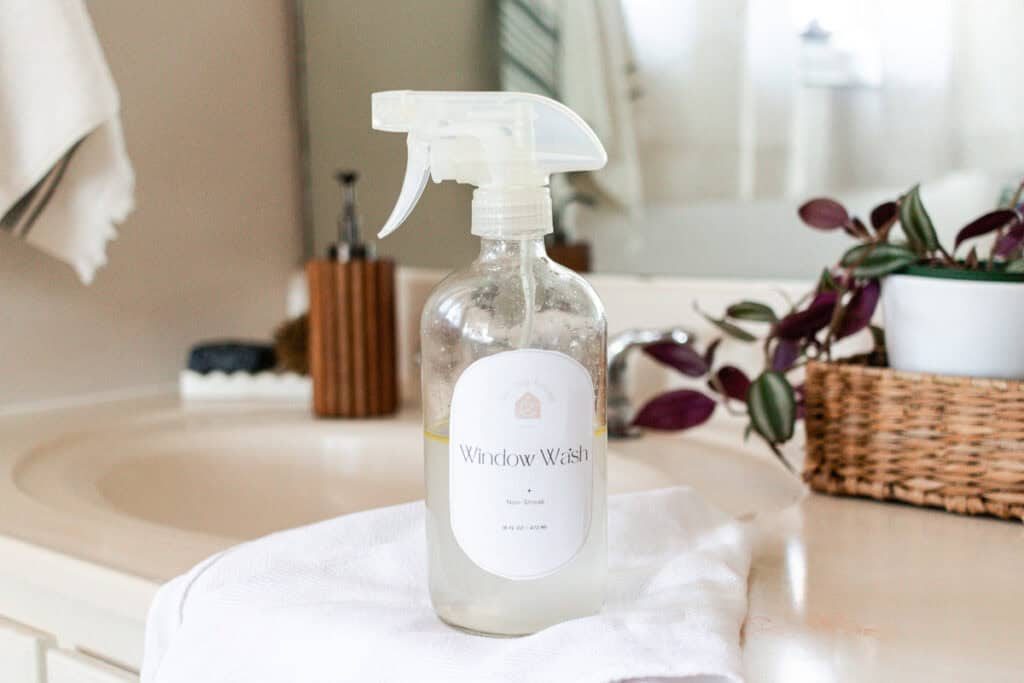
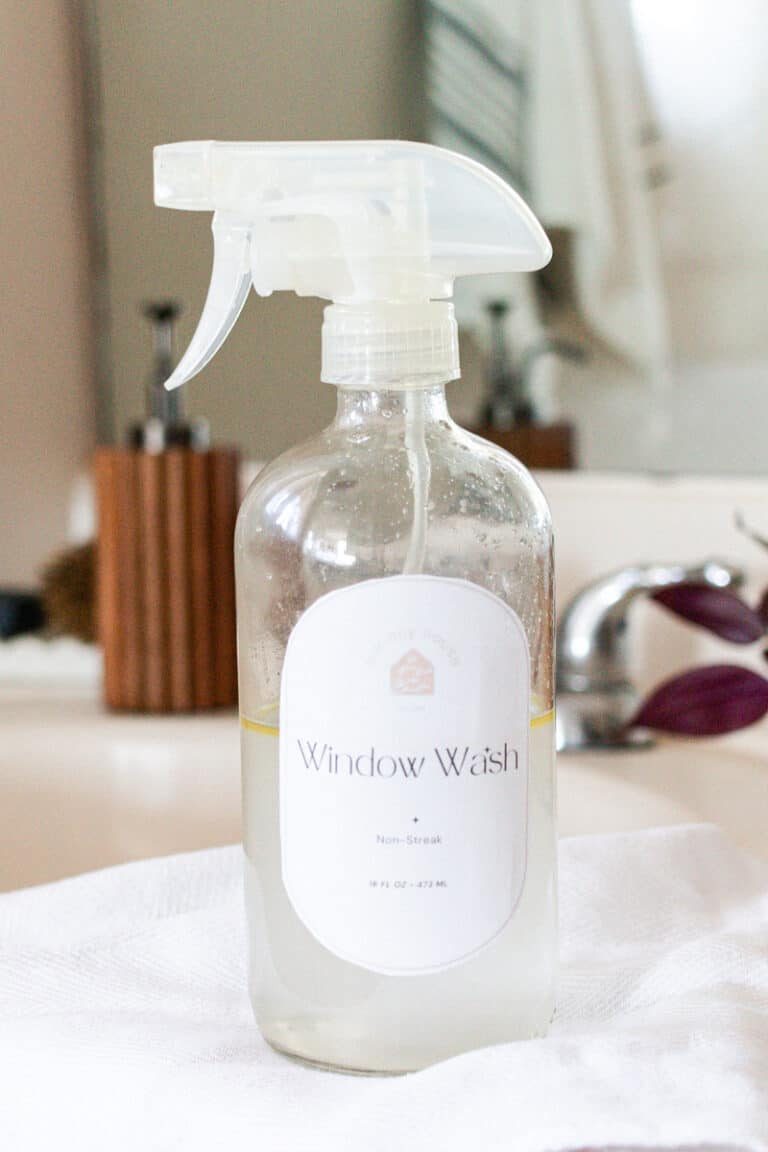
Find out for yourself how easy it is to make a homemade window cleaner with vinegar and water for a streak-free finish! If you are looking for an eco-friendly and cost-friendly way to clean your home windows, this is it!
For those of you who know me, we actually really love to clean! And over the years, we have discovered for myself the power of vinegar when it comes to cleaning products.
We have used vinegar in our homemade wood floor cleaner, our homemade stain remover, and a whole host of other DIYs. Needless to say, it is quite effective.
In this note, we'll share how to clean windows with vinegar to get that glorious, shiny, no-streak finish.
Forget the need to hire expensive professionals to clean your windows – vinegar is coming to the rescue!
Why you will love this DIY
- Uses common ingredients: We love that with just two ingredients required to make this, it’s never been easier to make your own cleaning spray. Of course, you can scent it with essential oils, but it’s not entirely necessary.
- Made with eco-friendly ingredients: Vinegar is often touted as an eco-friendly cleaning agent. According to Green Matters, naturally fermented vinegar is biodegradable and safe for the environment. However, it’s essential to choose vinegar carefully, as some mass-produced varieties contain harmful petrochemicals.
- Fragrance it the way you want! We generally don’t love the way conventional cleaners smell. Frankly, they give me a headache. We love that we can use essential oils to naturally fragrance this cleaner if we so choose!
- Effective cleaning solution: Simply because of the vinegar, which is acidic in nature, this cleaner is great for breaking down grease and grime, like you’ll see in our homemade oven cleaner, and it won’t leave your windows cloudy!
Materials needed
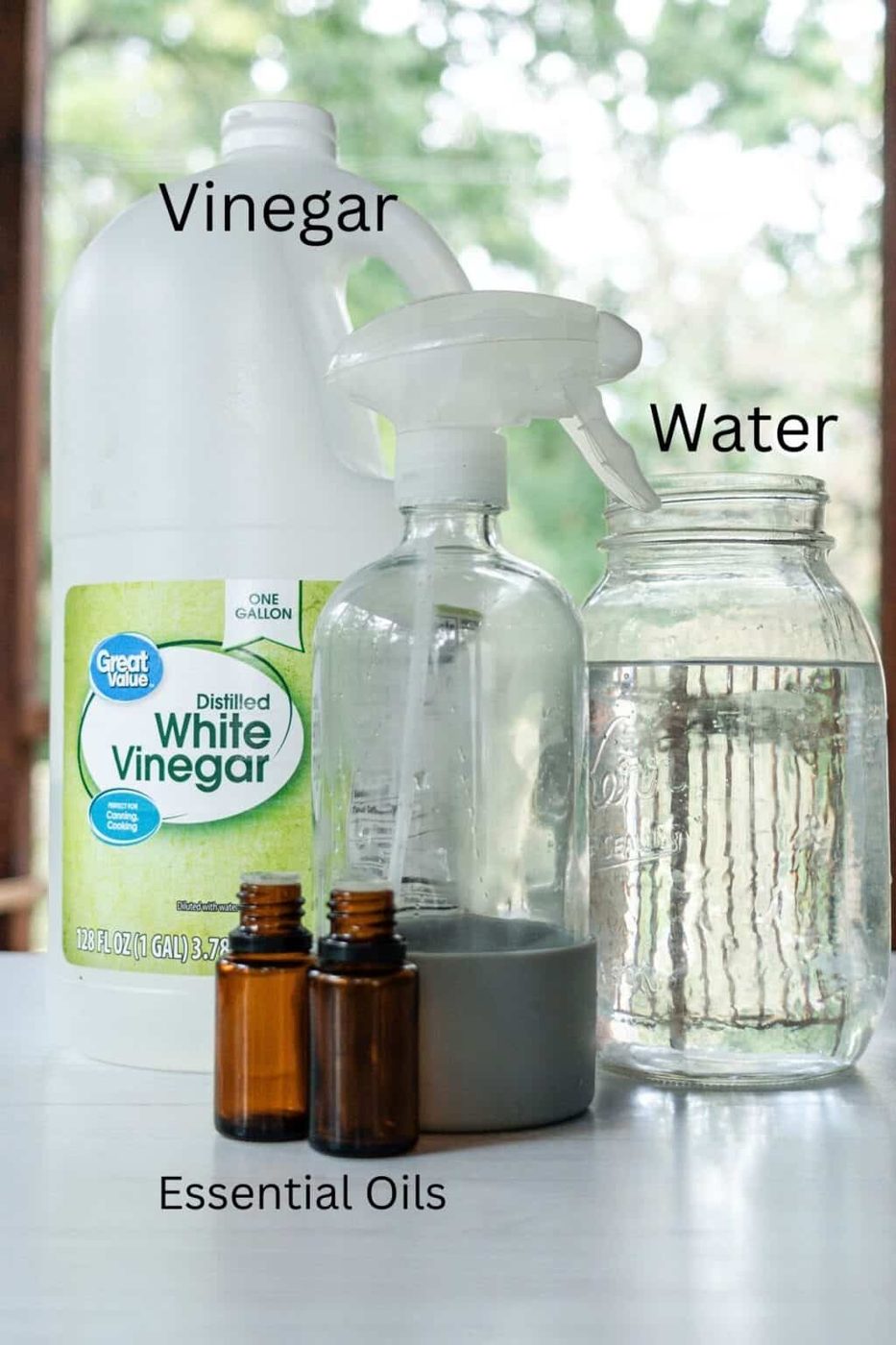
- Water: Water is crucial to our window cleaning recipe. Diluting vinegar with water is sufficient for most everyday cleaning according to the Family Handyman. It also reduces the strong vinegar scent while enhancing the cleaning solution’s effectiveness.
- Vinegar: Vinegar is the primary cleaning agent in our recipe. Its natural acidity effectively dissolves dirt and grime while leaving a streak-free shine on windows, according to Bedford Window Cleaning.
- Essential Oils: We do include orange and tea tree essential oils in this DIY to mask the vinegar smell. They are not totally necessary for this cleaner to work, so feel free to leave them out if you so desire!
- Spray Bottle: Any spray bottle will work for this window cleaner. To avoid potential chemical reactions from repurposing old conventional cleaning bottles, we highly recommend using a new spray bottle.
- Microfiber cloths: We like to use microfiber cloths over old cut-up t-shirts for our windows because they work so much better at lifting dirt and grime while ensuring a streak-free finish.
Variations
You can add a few tablespoons of rubbing alcohol to this solution to help it evaporate quickly, further reducing the chances of streaks or spots.
How to clean windows with vinegar
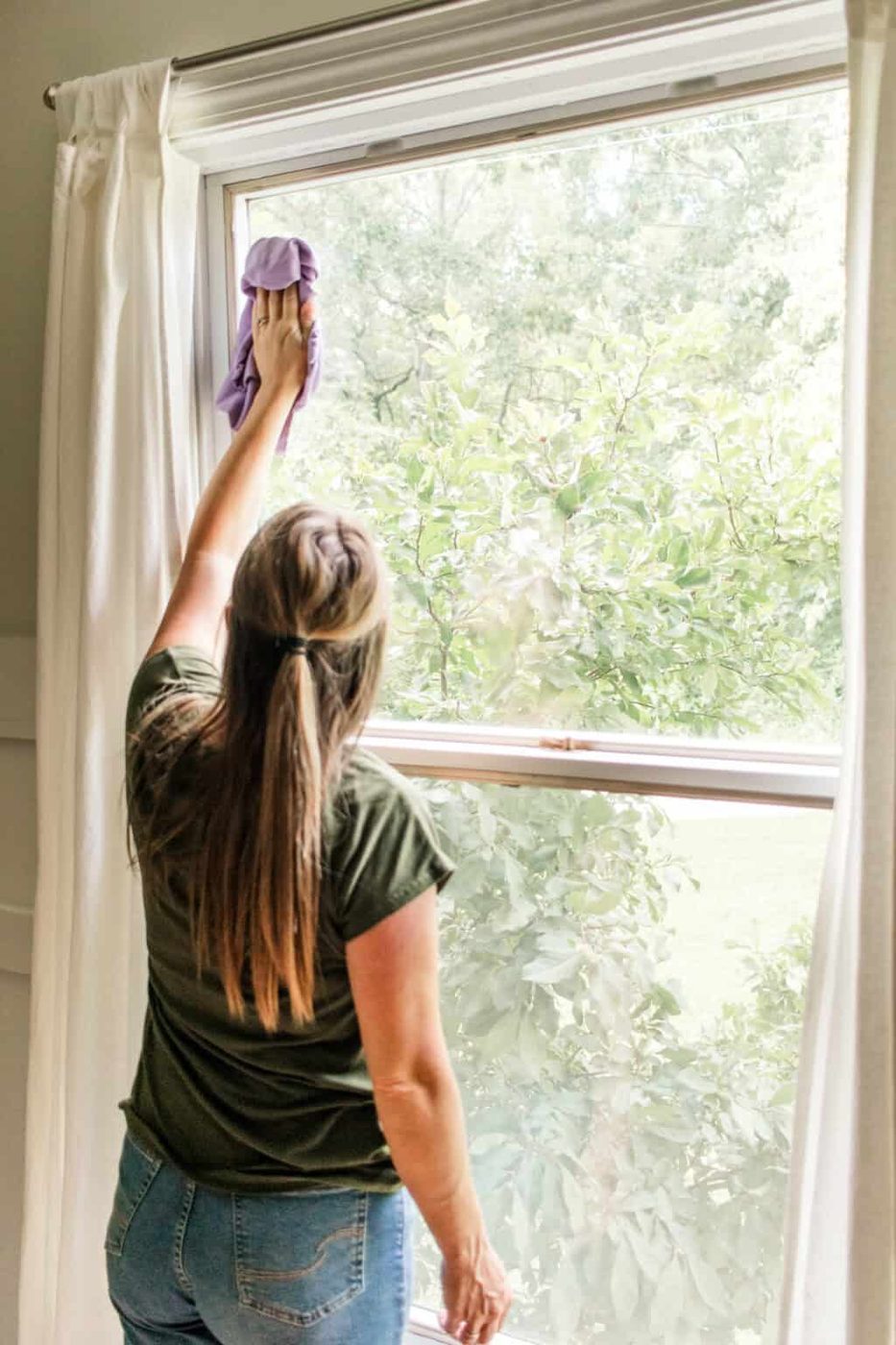
Step 1: Using a soft, dry cloth or duster, wipe around the corners of your windows to remove cobwebs and surface dust.
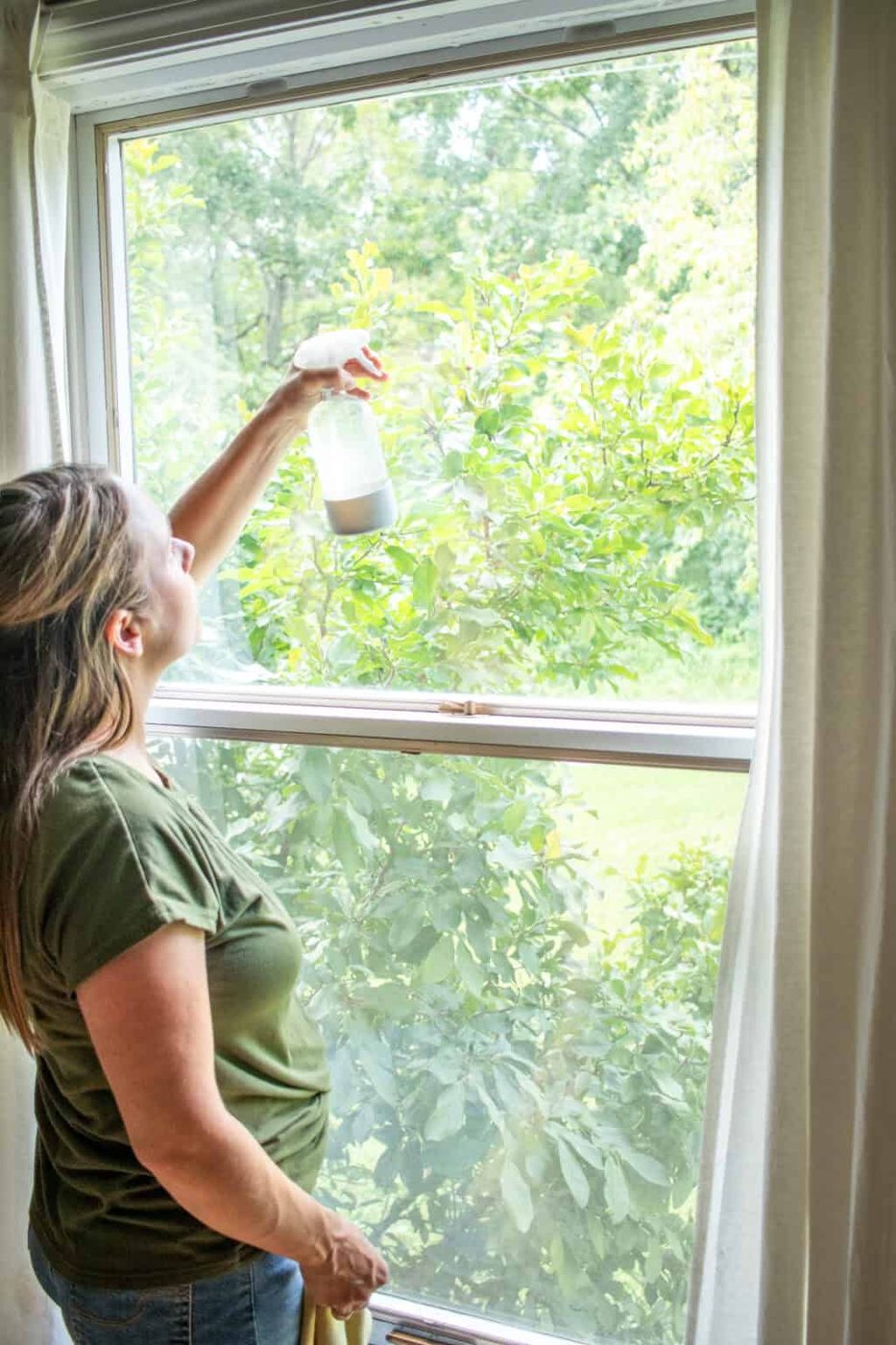
Step 2: Combine a 2-part water and 1-part vinegar solution in a clean spray bottle. Lightly mist the window with the homemade cleaner.
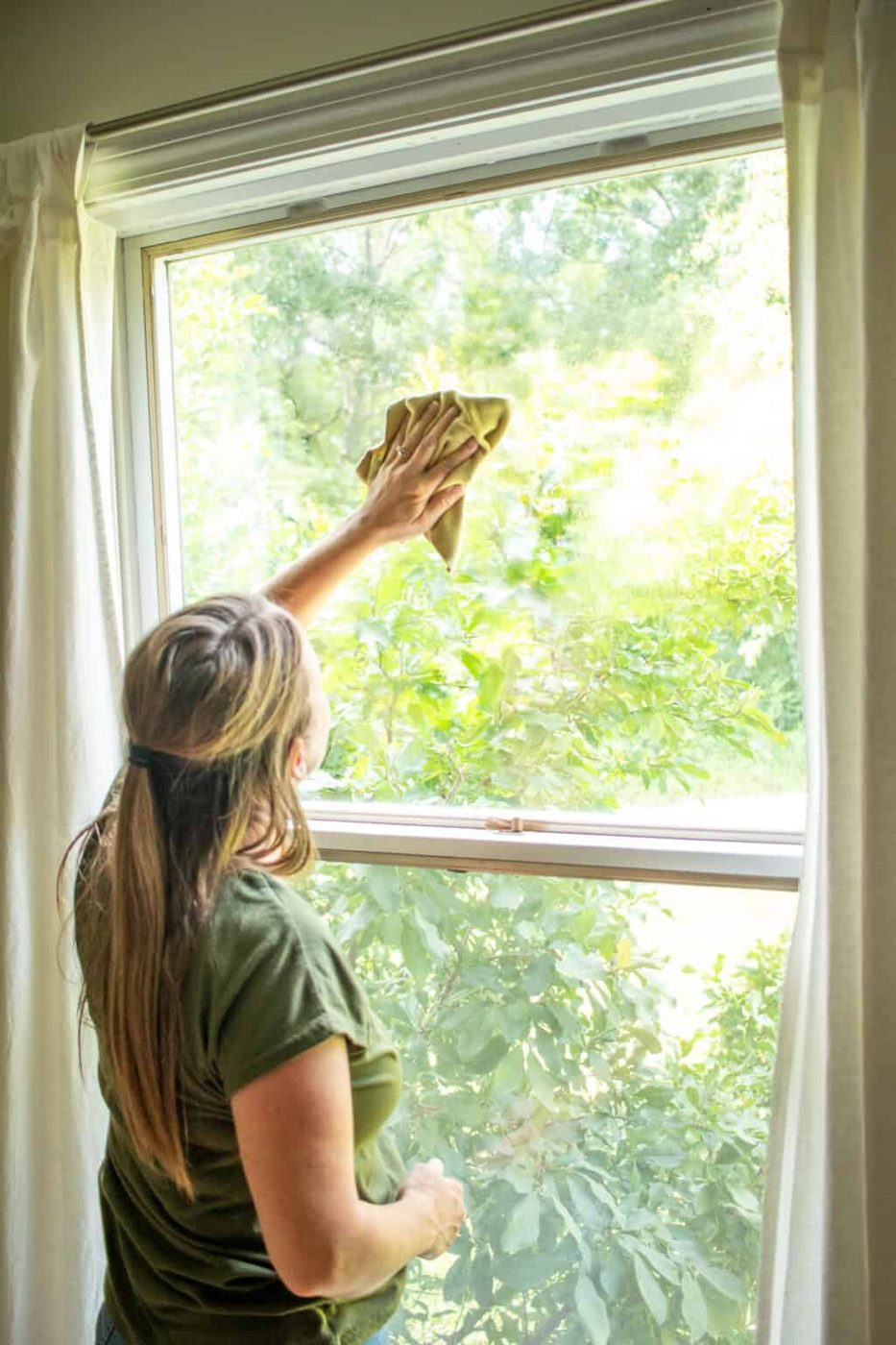
Step 3: Using a microfiber cloth or paper towel, wipe over the window glass, taking care not to get the vinegar solution on your window frames.
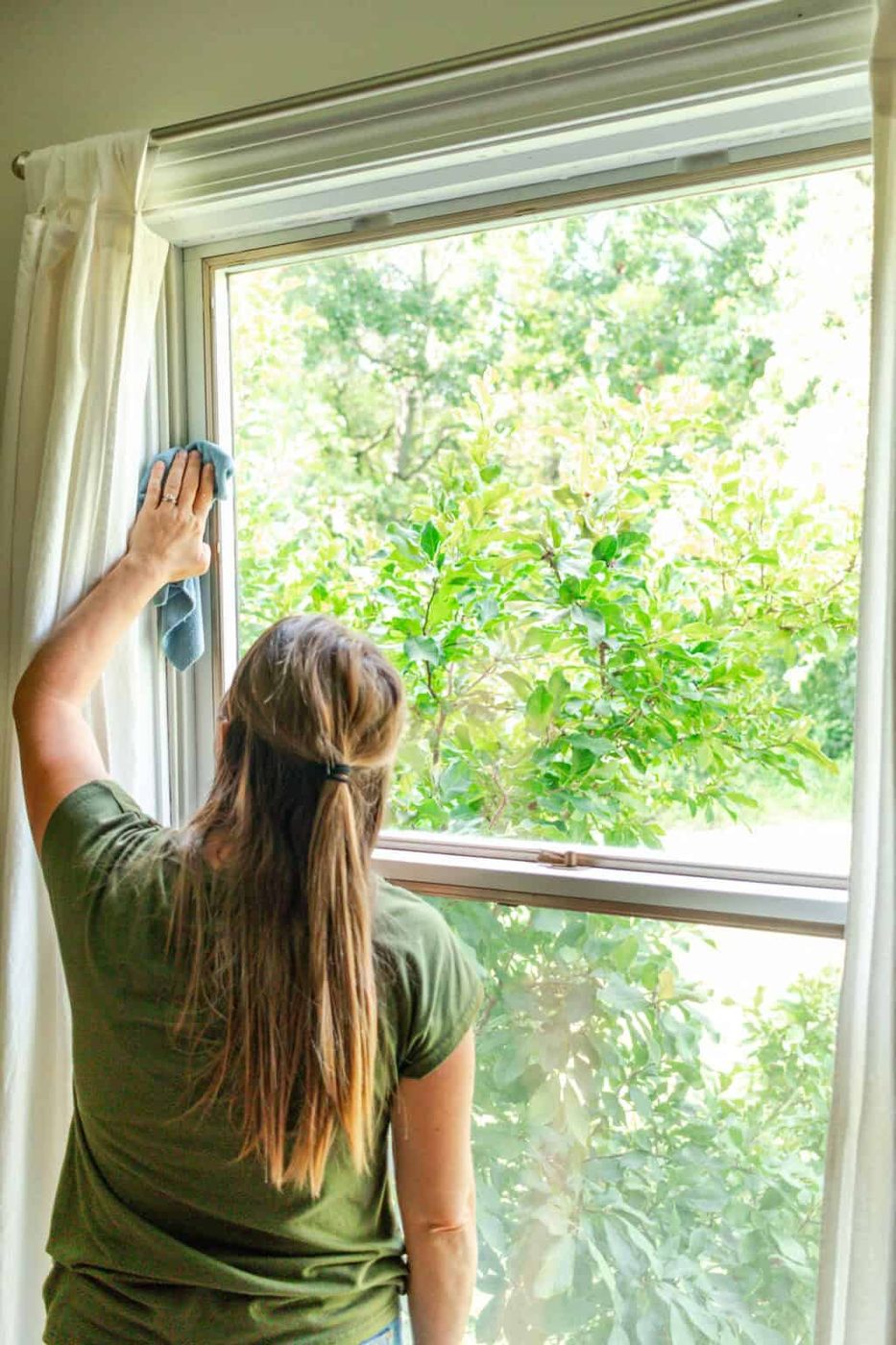
Step 4: Finally, dry the window pane and frame with a clean microfiber cloth. An old towel can also be used, but microfiber is best for a streak-free finish.
Pro Tip: For streak-free windows, clean on a cool day. Avoid bright sunlight, as the cleaning solution can dry too quickly, leaving unsightly spots.
Expert tips
- To protect your windows, apply the vinegar solution only to the glass surface. Avoid spraying on wooden frames, as vinegar can damage this material.
- For this DIY, vinegar should make up no more than half of the solution. We recommend a 2:1 water-to-vinegar ratio, but a 1:1 mix also works well for many people. If you need a stronger solution, you can increase the vinegar slightly but avoid exceeding a 50% concentration.
- Vinegar is acidic and can damage certain surfaces. Always test the solution on a small, inconspicuous area before applying it to a larger surface.
- Vinegar should not be used on unfinished wood, natural stone, or grout.
- Avoid mixing vinegar with bleach, as it can create harmful fumes.
Recipe FAQs
How often should we clean our windows?Interior windows should be cleaned biweekly, while the exterior can be cleaned twice a year, depending on environmental factors.
Can we use any type of vinegar for cleaning windows?While we prefer to use white distilled vinegar as the cleaning agent, several of our readers have said that apple cider vinegar can also be used.
How much vinegar should we use in our cleaning solution?A good starting point is a 2:1 ratio of water to vinegar. However, you can adjust this based on your preference. For dirtier windows, you might increase the vinegar content, but avoid exceeding a 50% vinegar solution.
Will vinegar damage our windows?Vinegar is generally safe for most window types. However, if you have older windows with delicate frames, it’s advisable to test the solution on a small, inconspicuous area first.
When is the best time to clean our windows?To minimize streaks, clean your windows on a cloudy day or in the morning when the sun is not directly shining on them. Use a high-quality microfiber cloth to dry the windows thoroughly after applying the cleaning solution.
Related Cleaning DIYs
- DIY anti-mold spray
- How to clean moldy window sills
- Homemade garbage disposal deodorizer
- How to fix a smelly washing machine
- How to clean calcium buildup from the shower
If you tried this Homemade Window Cleaning Tutorial or any other tutorial on our website, please leave a 🌟 star rating and let me know how it went in the 📝 comments below. Thanks for visiting!
5 from 14 votesCleaning Windows With Vinegar
By the studio Ascher Prep: 2 minutes minsActive: 5 minutes minsTotal: 7 minutes mins Yield: 12 oz SaveSaved Pin Print Find out for yourself how easy it is to make a homemade window cleaner with vinegar and water for a streak-free finish! If you are looking for an eco-friendly and cost-friendly way to clean your home windows, this is it!
 Equipment
- 16-oz spray bottle
- Microfiber cloths
Ingredients
- 8 oz of water
- 4 oz of vinegar
- 10 drops orange essential oil, optional
- 6 drops tea tree essential oil, optional
Instructions
- Add water, vinegar, and essential oils (if using) to the spray bottle.
- Secure the lid and shake well.
- Wipe around the corners of your windows to remove cobwebs and surface dust with a clean cloth.
- Lightly mist the window with the homemade cleaning solution.
- Using a clean microfiber cloth, wipe over the window glass, taking care not to get the vinegar solution on your window frames.
- Finally, dry the window pane and frame with a clean microfiber cloth. An old towel can also be used, but microfiber is best for a streak-free finish.