Homemade Bug: Spray for Plants
The summer season brings with it plenty of delicious crops, fruits, and vegetables to fill our kitchen tables. And if there is one thing we will not share our yields with, it would be the bugs. That’s why we like to keep this homemade bug spray for plants readily available!
This note will cover our favorite plants to grow to keep harmful bugs out, as well as how to make a bug and aphid spray for plants.
It is nearly time to enjoy the fruits of our labor! The days to pick our homegrown produce are fast approaching.
It’s truly one of the most satisfying things to pick your own organically grown fruit and vegetables and feed them to your family.
We know nothing else like it!
But summer also brings with it something else. Bugs! And lots of them. Well, bugs and weeds, but we already took care of the weeds with our DIY weed killer!
It’s genuinely heartbreaking when you find your veggie plants knawed away to a stump by aphids or slugs and snails chomping away on your lettuce leaves.
Yet the last thing you want to do is spray your plants with toxic store-bought bug killers or set up evil traps around your borders.
After all, that wonderful produce is going to end up on your dinner plate, and no one wants to eat chemicals. Plus, bugs in themselves are not all bad!
So why not try making this homemade bug spray for plants as the problem solver?
It’s 100% natural and toxin-free and is a repellent rather than a toxic bug killer. It’s safe to use on all vegetable plants, fruit trees and indoor plants too.
But first, we'll share a few other natural ways to help keep bugs away from your plants in this next section.
How to keep bugs off plants
There are several plants that have powerful properties to keep bugs out of your garden.
Now, bugs are not all bad, as we know – we don’t want to expel every bug as they have a very important role to play in sustaining the ecosystem.
If you ask me, one of the many wonders of the natural world is that there are certain plants that repel bugs from your veggies!
This means bugs naturally avoid the area because of the smell or sensation given off by these repelling plants.
As an example, bugs are naturally deterred by garlic and marigolds.
In fact, planting marigolds or garlic bulbs directly in your veggie plot will not only repel certain bugs, but it’ll also attract the good bugs, which keep the ‘bad bugs’ away.
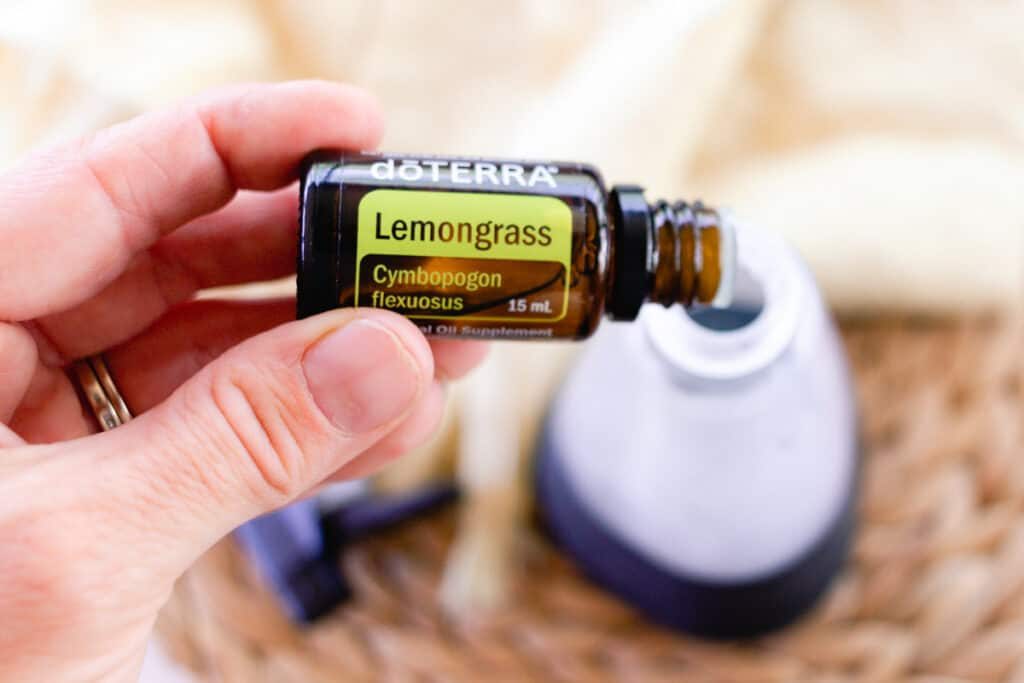
Bugs are also deterred by strong-smelling herbs such as peppermint, lemongrass, mint and basil, as well as lavender.
Peppermint is so effective that we'll add a few drops around the door frames of our house or use our essential oil ant spray to keep ants out. And lemongrass works wonders at deterring pesky wasps.
So planting these near your crops would be a great idea to help control bug numbers.
But what if you’re short on space to plant something extra? Or have windowsill pots of herbs, vegetables or fruits?
This is where our homemade bug spray for vegetable plants is a great idea.
Natural bug repellent for plants
One of the most destructive bugs are aphids which really do demolish your plants if they’re given the opportunity.
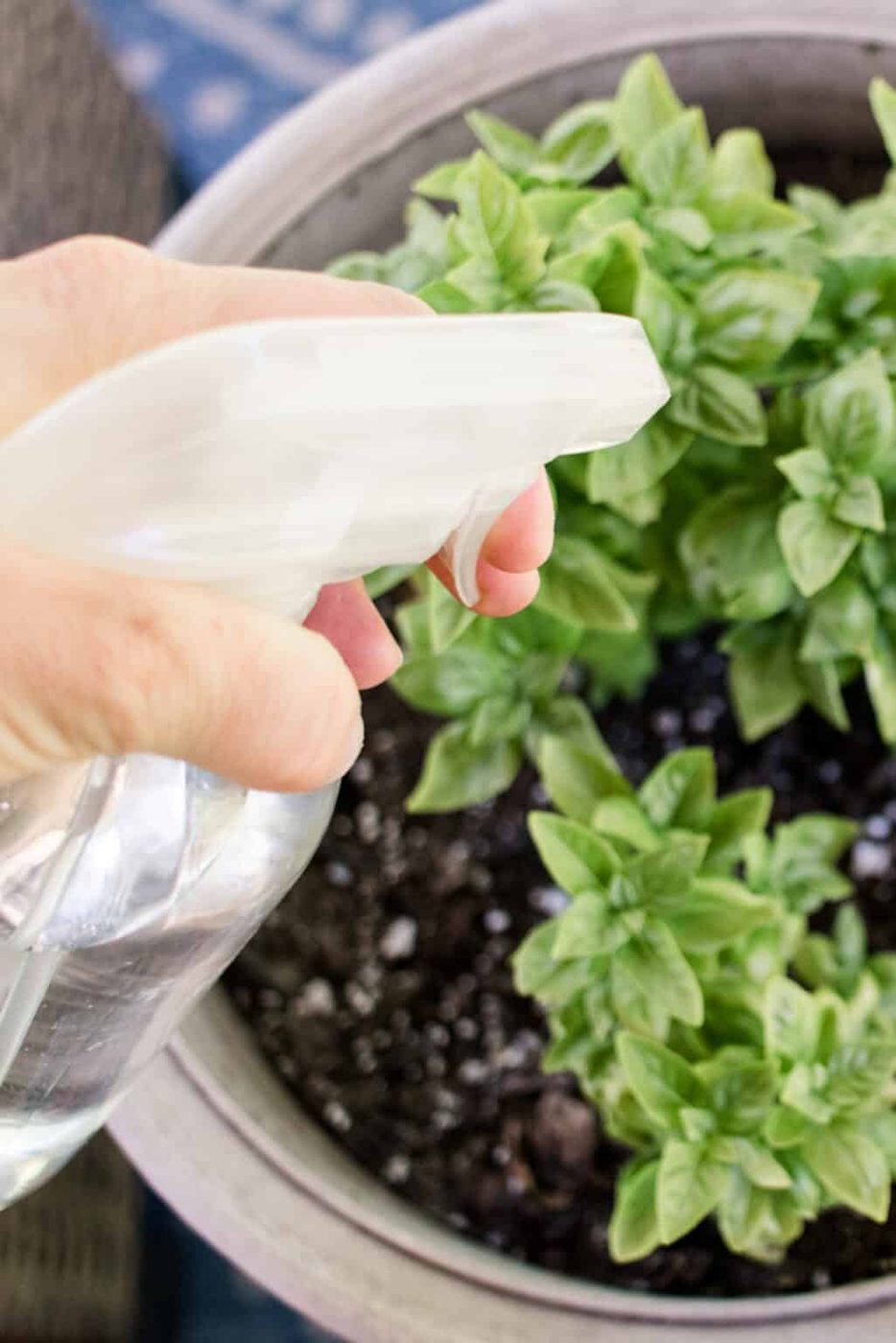
This recipe here works great as a homemade aphid spray, suitable for both indoor and outdoor plants.
We use this bug spray on all plants in our vegetable garden as well as fruit bushes and trees, roses, and borders; in fact, anywhere we feel bugs need deterring from.
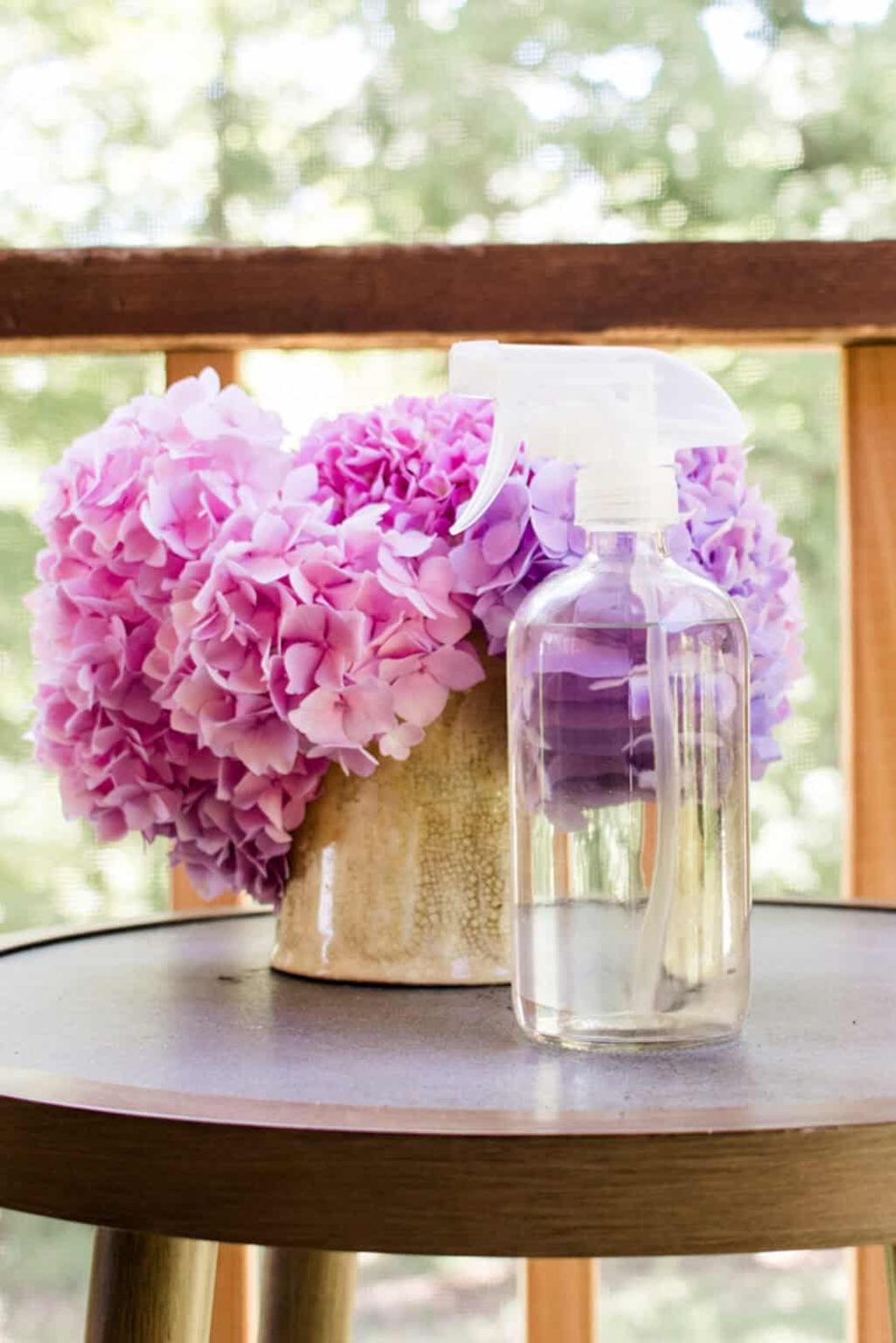
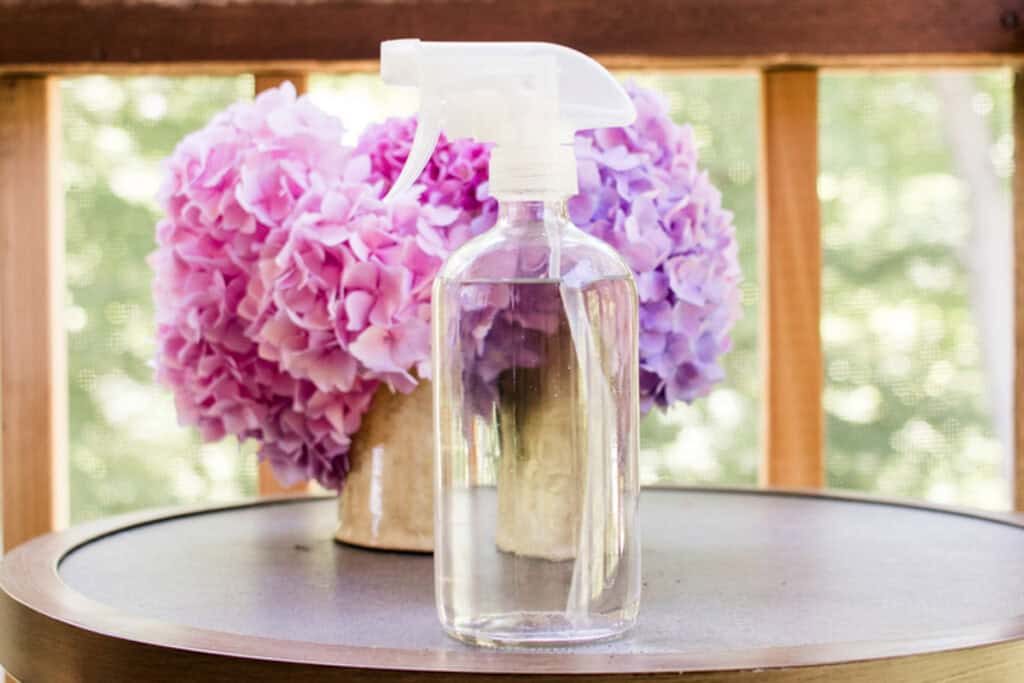
You’ll need a gallon jug for storage and a glass spray bottle for easy application.
This note contains affiliate links, which means we make a small commission at no extra cost to you. Get our full disclosure HERE.
What goes into this recipe
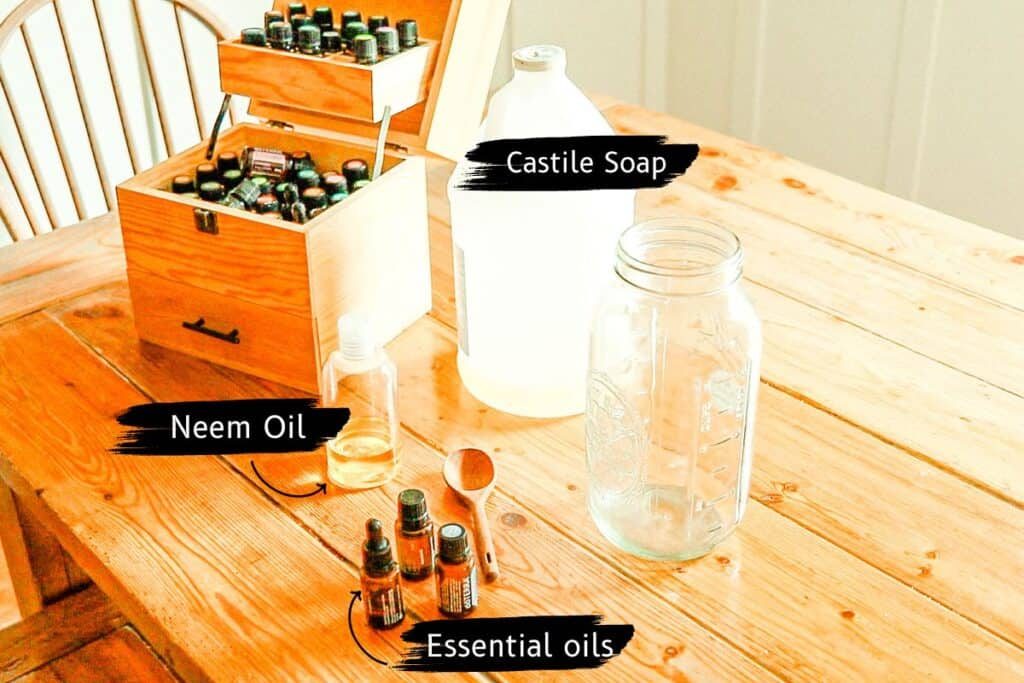
- Water: This is essential for properly diluting the ingredients as well as allowing us to use this in a spray.
- Neem oil: This oil is particularly effective against a wide range of pests, including aphids, and mites according to this article.
- Castile soap: According to mamasuds.com, castile soap can be used as a natural pesticide for your garden by spraying it directly onto plants.
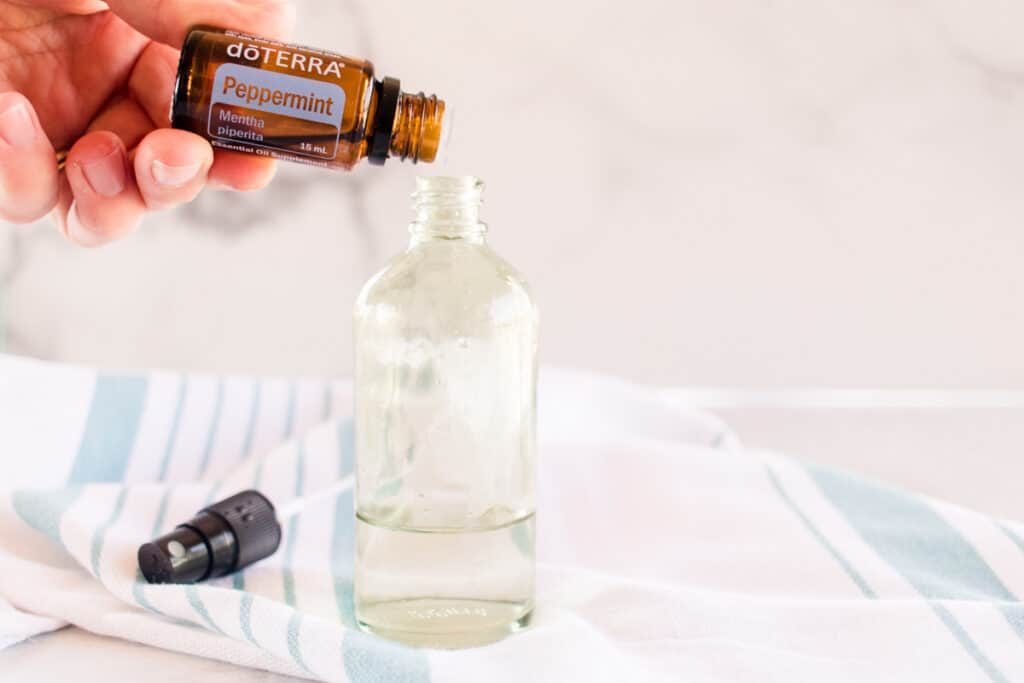
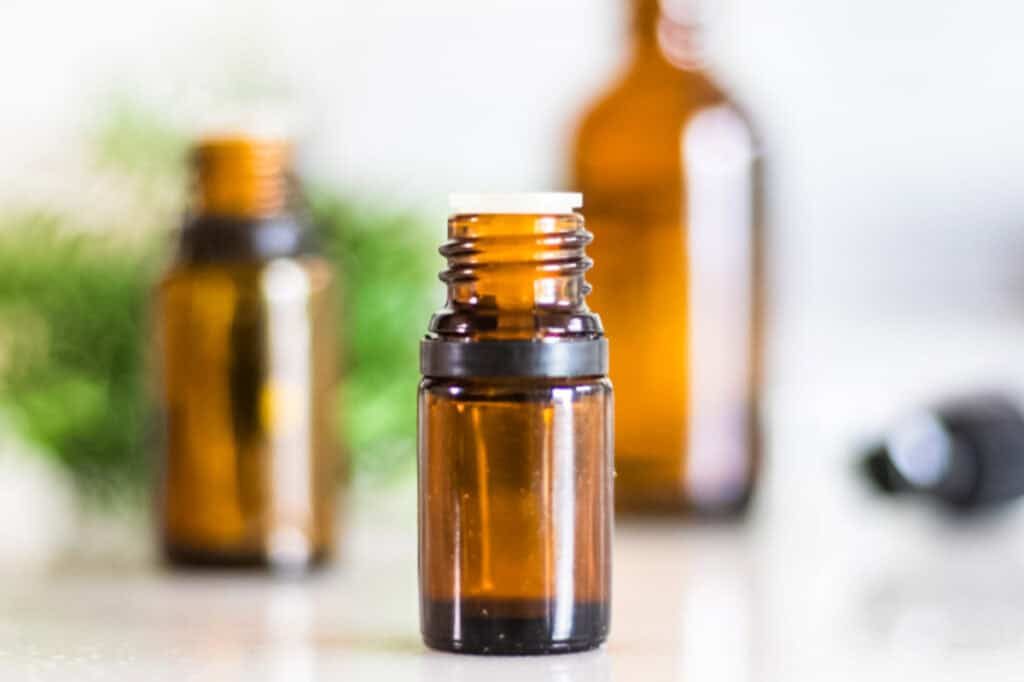
- Tea tree, peppermint, and cedarwood essential oils: These oils are known for their ability to be repellent to a number of insects. Their strong, pungent scents can deter these pests from approaching or settling on plants. As evidenced by an article published by the USDA, cedarwood oil alone can be highly effective in killing and repelling houseflies, mosquitoes, ticks, and other pests.
How to make bug spray for plants
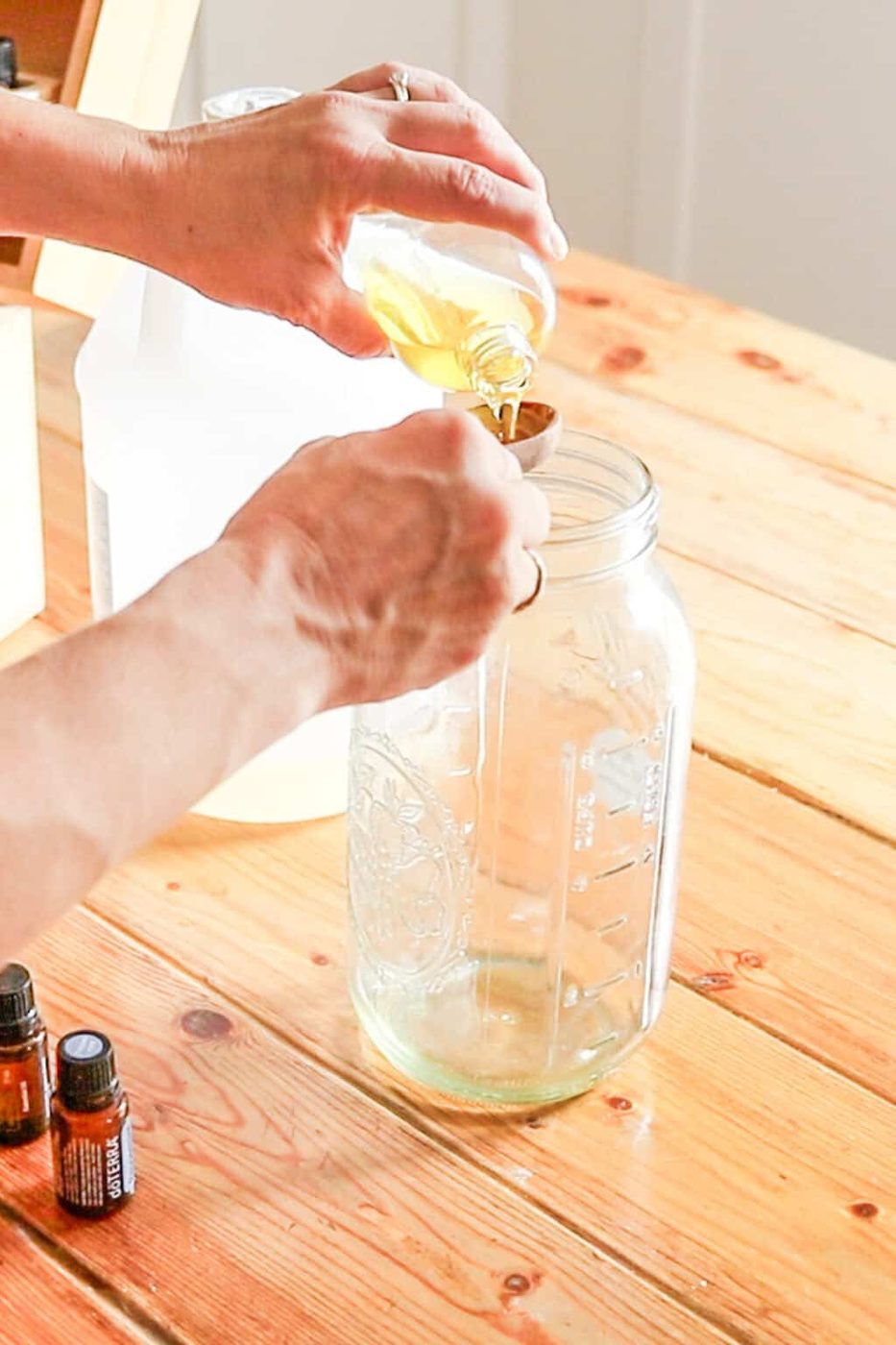
Step 1: Add all the ingredients except the water to a half gallon jug.

Step 2: Fill the rest of the way with water and stir will with a long-handled spoon.
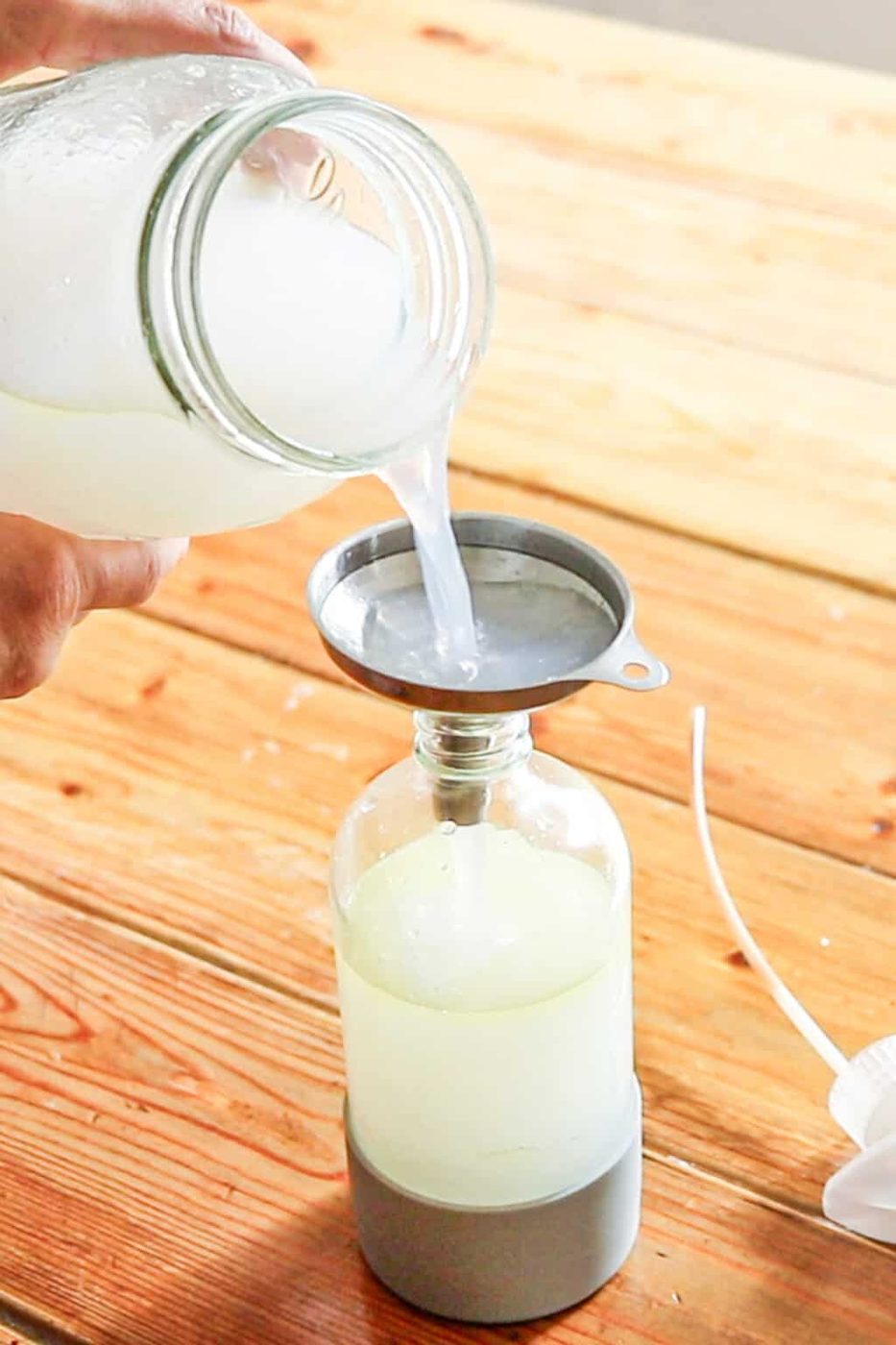
Step 3: Use a small funnel to transfer a portion of the aphid spray to a glass spray bottle.
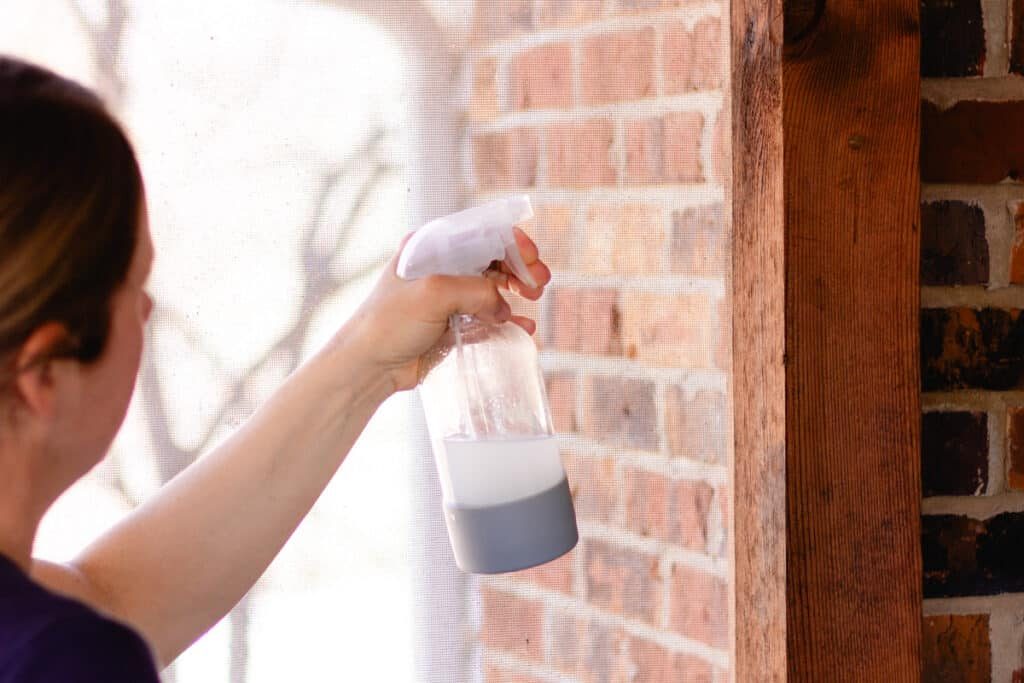
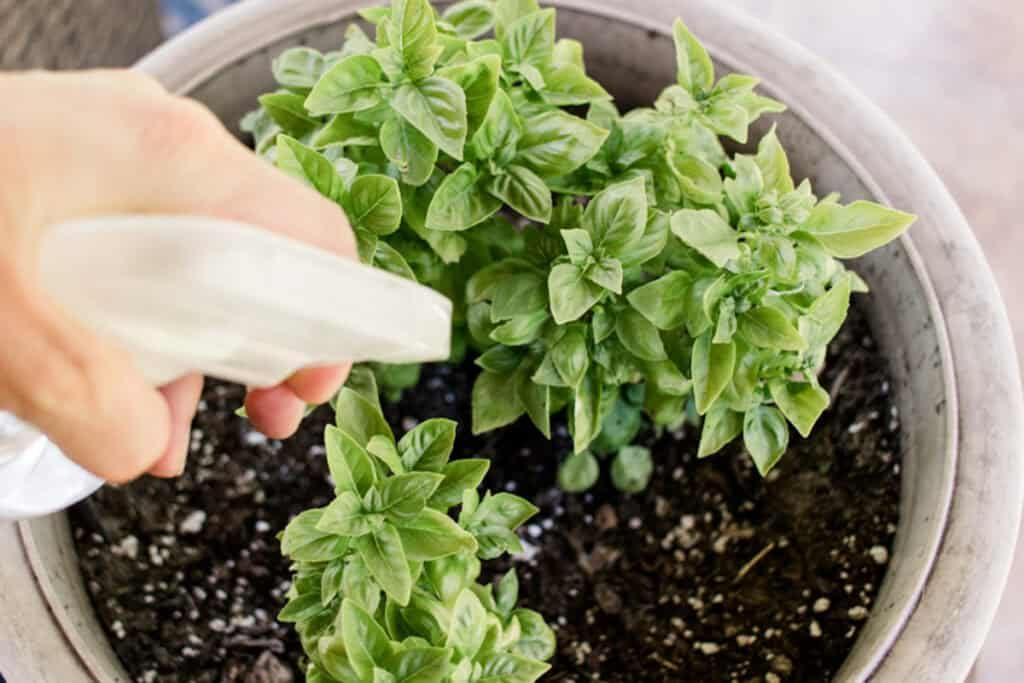
Step 4: Mist plants 1-2 times a week.
Expert tips
Before applying the bug spray to your entire plant, test a small, inconspicuous area first to ensure there are no adverse reactions or damage.
Store your homemade bug spray in a cool, dark place in a tightly sealed container out of reach of children.
Apply the spray in the early morning or late evening when pollinators are less active.
Why we don’t use vinegar
One of the questions you may be asking is, will vinegar kill plants?
It’s a great question, and the answer is yes, it can. Vinegar contains acetic acid, which, if not diluted properly, can cause burns on contact.
So never ever use straight vinegar from the bottle, or else your plants will most certainly not survive.
While we use vinegar in our homemade bug spray because it is an effective bug deterrent, we have found neem oil and castile soap to work quite well at keeping bugs and aphids off of plants without causing any harm.
For best results, follow the recipe below.
How to keep bugs off indoor plants
Application once or twice a week should be sufficient. Make sure you monitor your plants for bugs to see how well it works. Our recommendation is to use this homemade bug spray for indoor plants as soon as you notice signs of a bug infestation.
If the bugs persist, you may need to continue with a few more frequent sprays until the situation is under control.
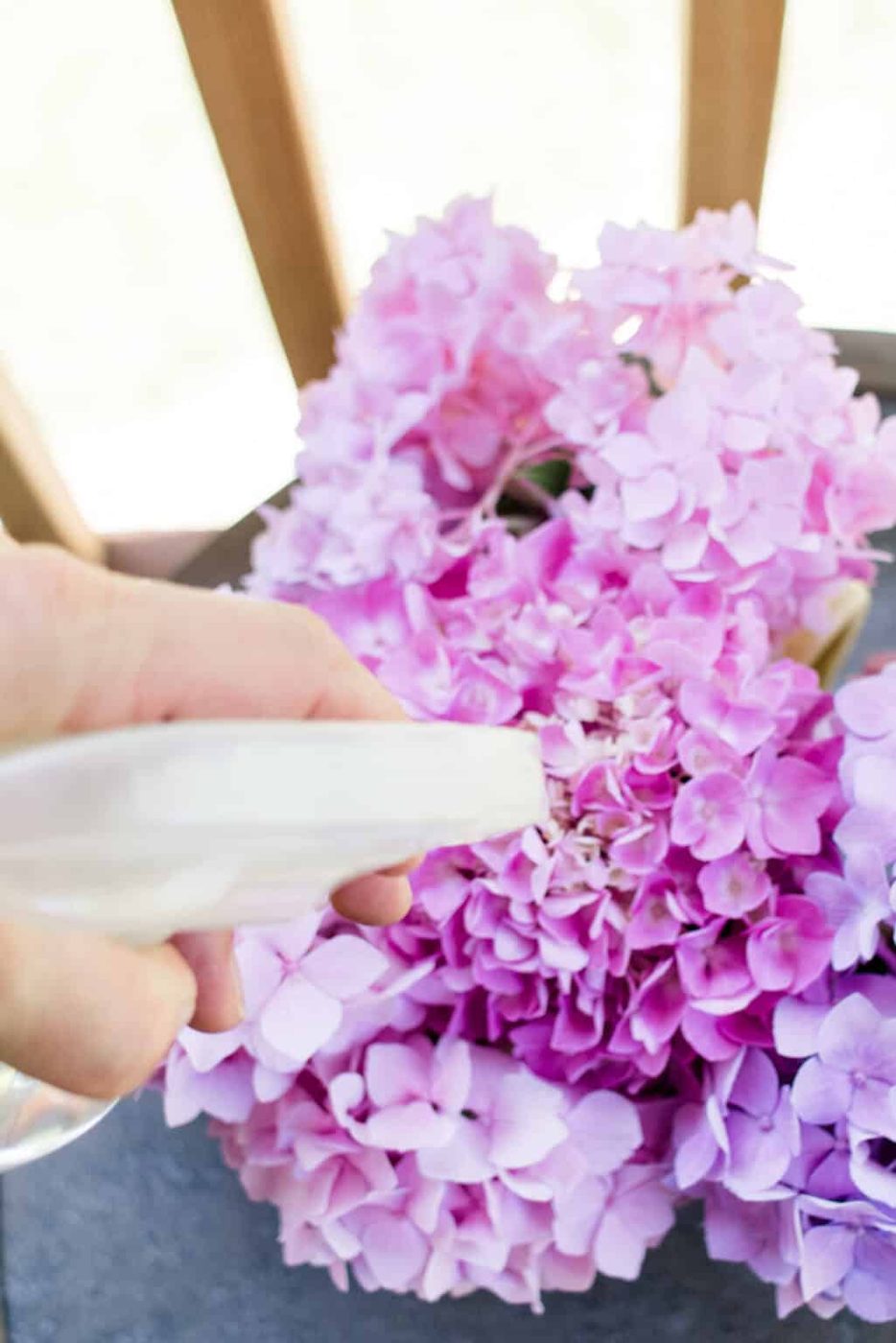
We always recommend a light misting when applying this bug spray – not a heavy dowsing.
And remember to keep your plants well-watered in hot weather. Both indoors and out!
Recipe FAQs
How long does this spray last?Generally, it can last for a few weeks to a few months.
Can we use this spray on any type of plant?While this spray is generally safe for most plants, it’s always a good idea to test it on a small area of the plant before applying it more widely.
How often should we use this spray?We suggest using it twice a week for best results.
Related content
- Bug repellent bars – these double as lotion bars, which is a win in our book
- Homemade citronella candles – perfect for a relaxing evening on the back deck.
- Homemade anti-itch cream or roller bottle – for natural relief from bug bites.
- How to make a moth ball – to protect your precious linens and clothes.
- Homemade fly spray – for indoor and outdoor needs.
We hope you give this homemade bug spray a go; it’s worked really well for me! Leave a comment below and let me know how it worked out for you.
5 from 7 votesHomemade Bug & Aphid Spray
By the studio Ascher Prep: 5 minutes minsActive: 5 minutes minsAdditional Time: 10 minutes minsTotal: 20 minutes mins Yield: 0.5 gallon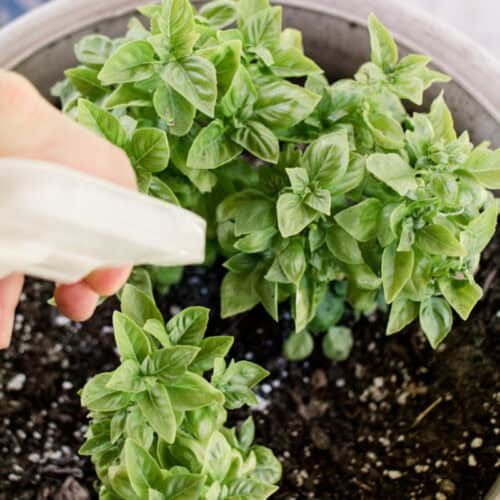 SaveSaved Pin Print Natural bug and aphid spray protects your plants against harmful bugs and insects that can wreak havoc on your garden and flower beds.
 Equipment
- Spray Bottle
- one-half gallon jug
Ingredients
- 2 tablespoons of neem oil
- 1 tablespoon of castile soap
- 6 drops of tea tree essential oil
- 4 drops each of peppermint and cedarwood essential oil
- 1 gallon of filtered water
Instructions
- Add all the ingredients except the water to a one-half gallon jug.
- Top off with water and stir well with a long-handled spoon.
- Use a funnel to transfer a portion of the mixture to a spray bottle.
- Mist plants 1-2 times a week