
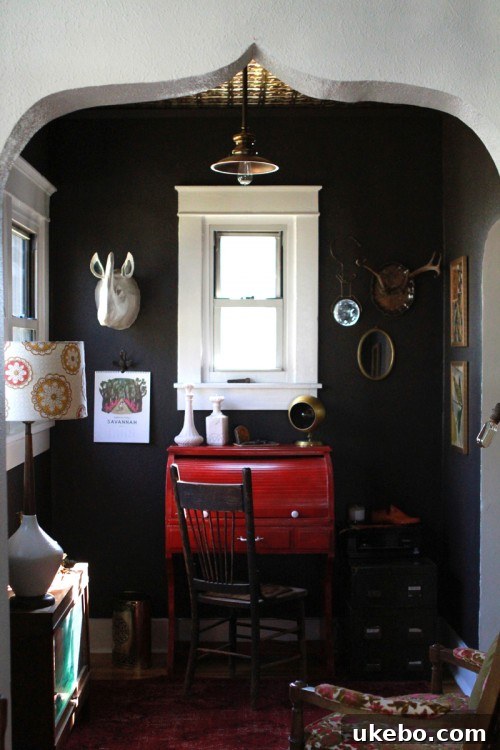
Yes You Can: Embracing Deep Wall Colors in Small Spaces
Hello, fellow home enthusiasts!
I’ve recently come to a delightful conclusion: I absolutely adore living in our small home. The transition from a space nearly double its size initially presented a few concerns, particularly regarding our finished kitchen and second bathroom – those I do miss! However, when it comes to the actual living space, I genuinely don’t miss the larger footprint at all. This journey into compact living has been incredibly liberating, prompting me to rethink conventional design wisdom and embrace intentionality.
One significant challenge I grappled with was the perceived need to scale back on certain design elements I cherish, simply because our home is now smaller. I found myself questioning my deep love for rich, moody colors, the maximalist aesthetic, and even large-scale furniture pieces. For a moment, I wondered if these elements were incompatible with a more compact environment. But then, I stopped. My heart wants what it wants, regardless of square footage. And I realized that the essence of personal style shouldn’t be dictated by the size of a room.
This realization sparked a new series, which I’m thrilled to call “Yes You Can.” This series will delve into how to apply bold and beloved design principles to smaller spaces, proving that limitations can often inspire the most creative solutions. Today, we’re tackling a topic that receives a lot of skepticism: using deep, saturated wall colors in small spaces.
Debunking the Myth: Dark Colors in Small Rooms
It’s a question I hear all the time: “Is it okay to use dark colors in a small space? Won’t a moody color just make the room feel even smaller and more cramped? Shouldn’t dark colors be reserved only for expansive rooms?” Let me tell you, these notions are absolute nonsense! The conventional wisdom that dictates small rooms must be painted in light, airy hues to appear larger is a pervasive myth that often stifles creativity and prevents homeowners from achieving truly unique and personalized interiors.
Here’s the truth about saturated colors in compact environments: You absolutely can do it, and it unequivocally works! The secret lies not in making a small space appear larger, but in transforming it. Instead of fighting its smallness, we embrace it. Dark colors don’t necessarily shrink a room; they can profoundly change its character, elevating it from merely “small” to wonderfully cozy, intimately inviting, and deeply relaxed. In fact, for small spaces, dark colors can be your ultimate design ally. By embracing the room’s inherent scale and flaunting its intimate dimensions, you can achieve incredibly chic, sophisticated, and memorable spaces.
Why Deep Hues Work Wonders in Compact Living
The magic of deep colors in small rooms stems from several psychological and visual effects:
- Creating Depth and Ambience: Darker shades tend to recede, blurring the boundaries of a room. Without distinct corners or edges, the space can feel boundless and enveloping rather than constricted. This creates a sense of depth and a perception of space that light colors often fail to achieve.
- Cultivating Coziness and Intimacy: Light colors reflect light, making a room feel bright and open. Dark colors absorb light, which can create a cocoon-like effect. This quality is perfect for bedrooms, dens, or reading nooks, transforming them into sanctuaries that feel warm, secure, and wonderfully intimate.
- Highlighting Art and Decor: A dark wall provides a dramatic backdrop that makes artwork, mirrors, and decorative objects truly pop. Against a rich, deep hue, even simple pieces can become focal points, adding layers of interest and personality to your small space.
- Adding Sophistication and Drama: Deep colors inherently exude a sense of luxury, drama, and timeless sophistication. Whether it’s a rich navy, a forest green, a charcoal gray, or a deep plum, these colors can elevate the aesthetic of even the smallest room, making it feel intentionally designed and high-end.
- Enhancing Architectural Features: Dark colors can surprisingly highlight architectural details like crown molding, trim, or built-in shelving, especially if painted in a contrasting lighter shade or a slightly different finish.
Practical Tips for Mastering Dark Colors in Your Small Home
Ready to take the plunge? Here are some actionable tips to ensure your deep-colored small space is a resounding success:
1. Layer Your Lighting
Good lighting is paramount when working with dark walls. Since dark colors absorb light, you’ll need multiple light sources to illuminate the space effectively and create different moods. Think in layers:
- Ambient Lighting: Overhead fixtures like flush mounts, semi-flush mounts, or small chandeliers provide general illumination.
- Task Lighting: Table lamps and floor lamps offer focused light for reading or working.
- Accent Lighting: Wall sconces, picture lights, or LED strips can highlight architectural features, artwork, or shelves, adding warmth and dimension.
- Natural Light: Don’t block windows. Use sheer curtains or blinds that can be easily opened to maximize daylight.
2. Consider Your Ceiling Color
While painting the ceiling the same dark color as the walls can create an incredibly immersive, jewel-box effect (especially with a high ceiling), you don’t always have to. A crisp white ceiling can provide a visual break and make the room feel taller. Alternatively, a slightly lighter shade from the same color family as the walls can offer a softer transition.
3. Choose the Right Sheen
The finish of your paint can significantly impact how light interacts with the dark color. A flat or matte finish will absorb more light, creating a velvety, sophisticated look, perfect for a cozy den. A satin or eggshell finish offers a subtle sheen that reflects a little more light, making it a good choice for high-traffic areas or where you want a bit more luminosity. High-gloss finishes, while bold, can be incredibly dramatic and reflective, adding a modern edge.
4. Incorporate Reflective Surfaces
To counteract any potential for a room feeling too dim, introduce reflective elements. Large mirrors not only bounce light around but also create the illusion of more space. Metallic accents (gold, silver, brass, copper) in decor, furniture legs, or light fixtures add sparkle and sophistication. Glass or acrylic furniture can also help maintain an open feel.
5. Balance with Lighter Accents and Textures
While the walls are dark, you don’t want the entire room to feel heavy. Introduce lighter elements through furniture, textiles, and decor. A light-colored sofa, creamy throws, natural wood accents, or light-colored rugs can provide necessary contrast and visual relief. Layering various textures – a chunky knit blanket, a velvet pillow, a woven rug – adds depth and warmth, preventing the dark space from feeling flat.
6. Embrace Large-Scale Furniture (Yes, Really!)
One of my initial concerns was using large-scale furniture in a small space. However, paradoxically, a few well-chosen, larger pieces can sometimes make a small room feel grander and more intentional than many small, cluttered items. A generously sized sofa or a substantial armchair can anchor the room, especially against dark walls, creating a feeling of established comfort rather than overwhelming the space. Ensure pieces are proportional to the room’s function and don’t block pathways.
7. Use Greenery and Natural Elements
Vibrant green plants stand out beautifully against dark walls, injecting life and freshness into the space. Natural wood tones, woven baskets, and linen fabrics also provide a grounding, organic contrast that prevents dark rooms from feeling too stark or severe.
Inspiration Gallery: Dark & Daring Small Spaces
Don’t just take my word for it. Here are some of my favorite small spaces that have fearlessly embraced dark colors, proving just how fabulous they can be:
via Ben Pentreath
via Lonny
via Design*Sponge
via Design*Sponge
via The Little Umbrella
via The Design Files
Don’t Be Afraid: Embrace the Bold
I truly hope this encourages you not to be scared of using deep, rich colors in your small spaces. They have the power to transform a modest room into something truly exceptional – a cozy retreat, an elegant statement, or a dramatic backdrop that truly reflects your unique style. It’s about embracing the possibilities and trusting your instincts, not conforming to outdated rules.
Until next time, dare to design!
Xo-Shavonda